
Boat Tour Waikiki: How Scuppers Keep Decks Clear After Ocean Spray
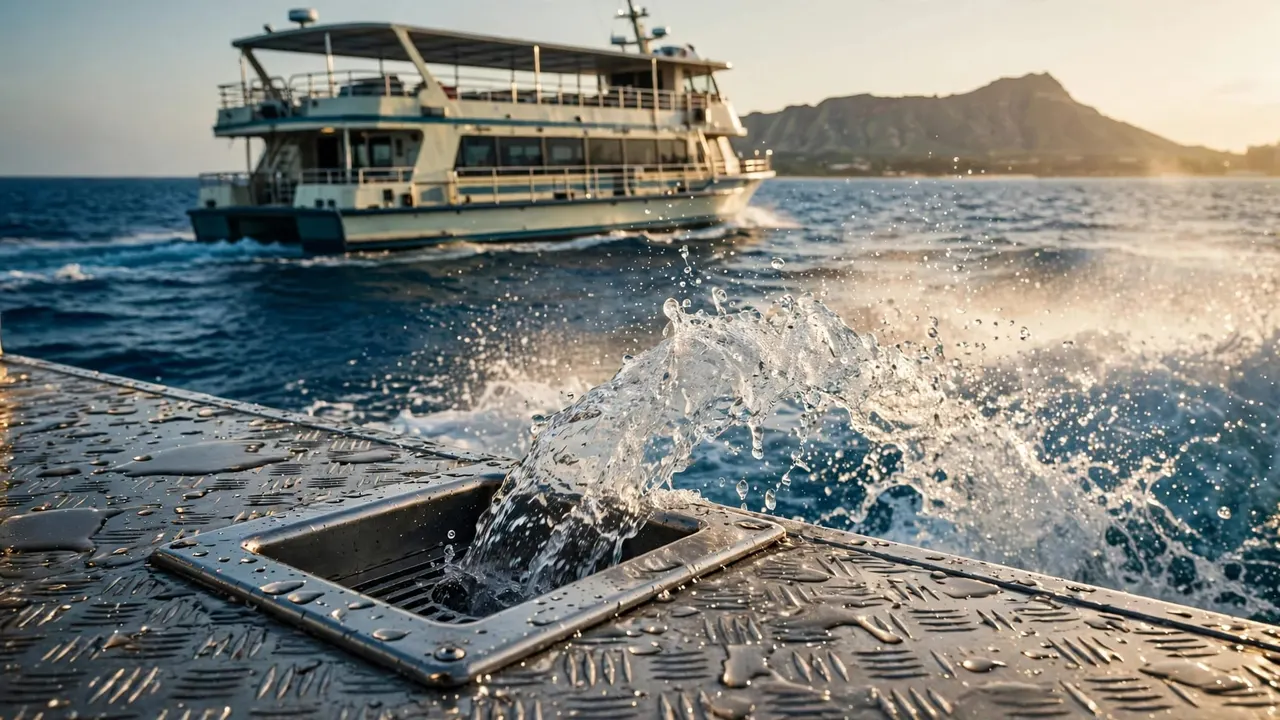
Living Ocean Tours puts you close to the water from Kewalo Basin Boat Harbor, only minutes from Waikiki. On a Boat Tour Waikiki visitors remember, salty spray is part of the Pacific experience, but standing water on deck shouldn’t distract you from the view.
That is where scuppers matter. These simple deck drains move spray and rainwater overboard, helping the crew keep walking areas more usable between snorkeling, sightseeing, and wildlife viewing.
Key Takeaways
- Scuppers are deck drains that direct water off a boat rather than letting it pool where guests walk.
- On a Boat Tour Waikiki outing, spray can come from wind, boat wakes, wave action, and activity near the swim ladder.
- Clear scuppers support a more organized deck, but they do not guarantee dry footing or replace crew direction.
- Your own habits matter. Keep bags out of walkways, use railings, and wear footwear with grip for boarding.
- Living Ocean Tours operates Coast Guard-inspected, custom-built double-decker boats with shaded seating, restrooms, dry storage, and sturdy ladders.
- The company is the only tour company with professional snorkel guides, giving you direct in-water support during a reef swim.
Boat Tour Waikiki Decks: How Scuppers Move Spray Overboard
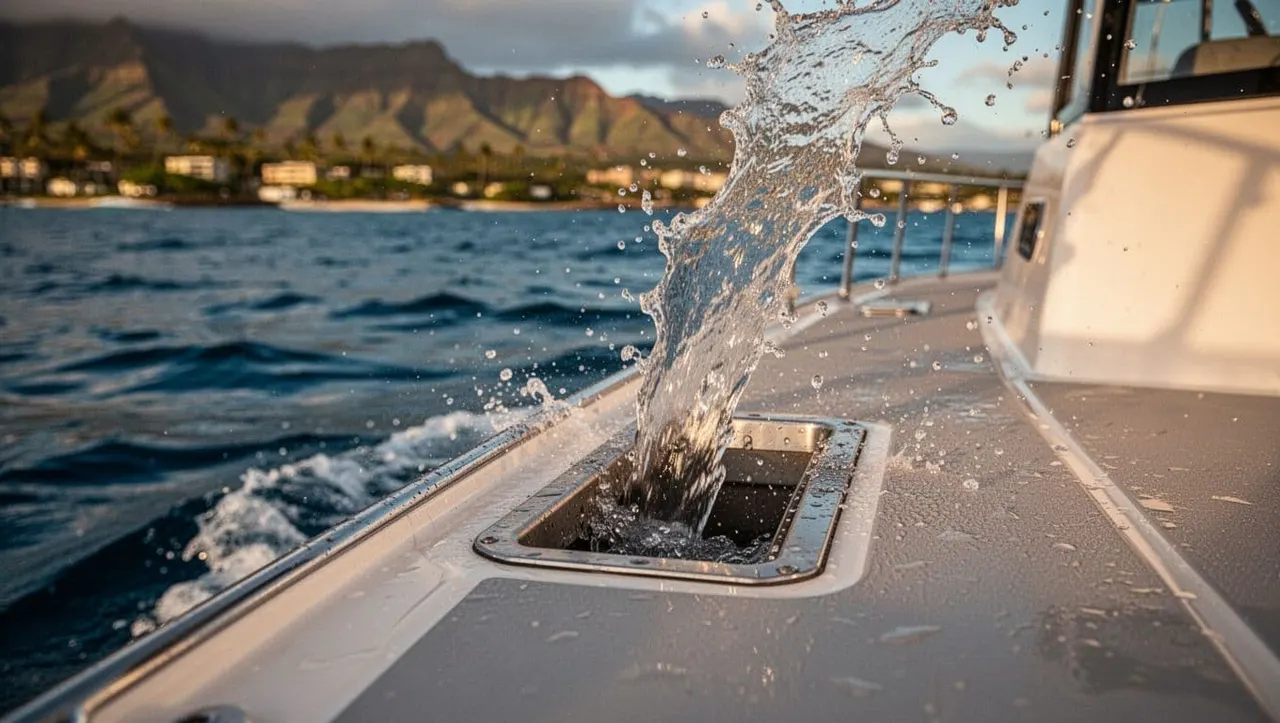
A scupper is an opening at a low point along a deck edge, cockpit, or rail. When water reaches it, gravity carries that water through the opening and overboard. You might never notice one until a burst of spray crosses the deck.
Water follows the lowest path
Boat decks often slope slightly toward drainage points. That subtle shape helps water move away from seating areas and busy walking routes instead of collecting in shallow puddles.
On a Boat Tour Waikiki cruise, the drainage route has a practical job after a wave hits the hull or swimmers return from the water. Water moves toward the scupper, exits the deck, and leaves more room for guests to walk carefully, sit down, or prepare for the next part of the trip.
America’s Boating Compass guidance on deck scuppers explains that scuppers drain a boat’s cockpit or deck and should stay clear of debris.
A scupper needs an open path
A drain cannot do its job if a towel, loose bag, food wrapper, or other item blocks it. Crew members check deck areas throughout an outing, while you can help by keeping personal belongings stored and walkways open.
A scupper handles water that reaches the deck. It does not make a wet surface safe to ignore.
If the boat moves through choppier water, stay seated when directed and wait for the crew to say it is safe to move. Good drainage and smart passenger habits work together.
Why Clear Decks Improve Your Time on the Water
A clear deck feels less hectic, especially when families, first-time snorkelers, and returning swimmers are moving through the same areas. The goal isn’t to keep every surface perfectly dry. It is to give water a place to go and people enough space to move with care.
Snorkel stops create more deck traffic
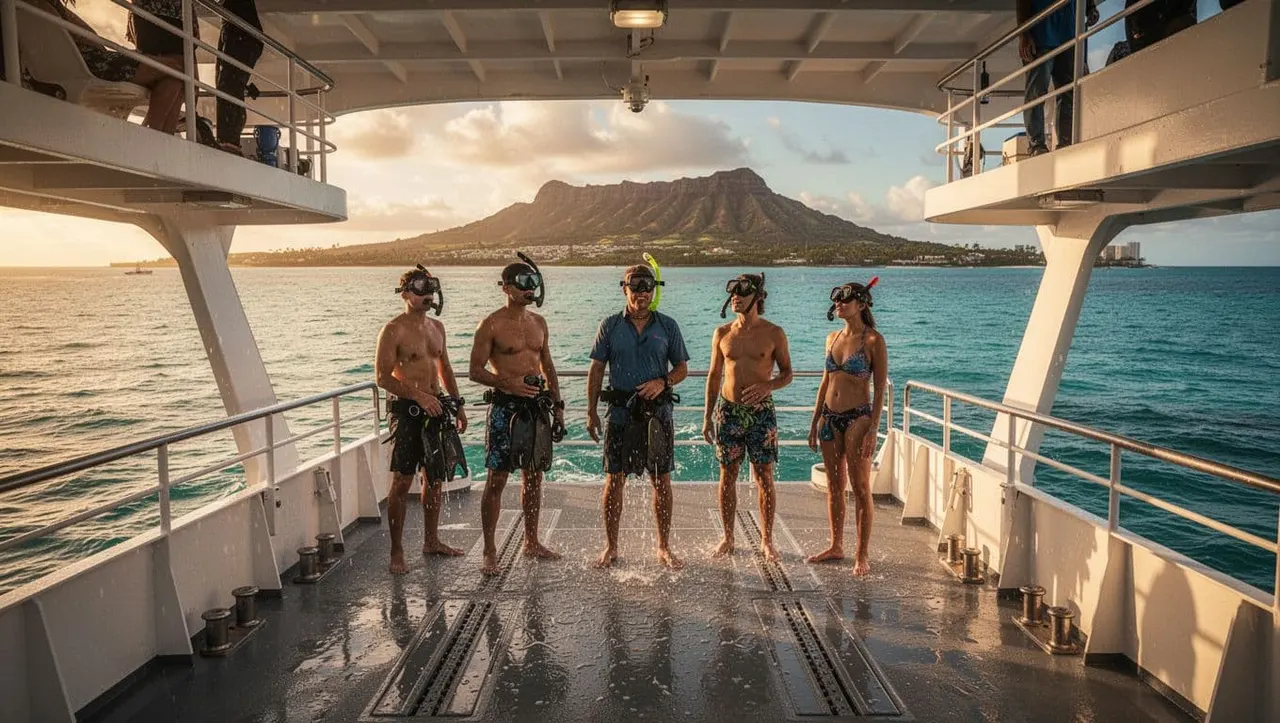
Snorkeling adds fins, masks, flotation gear, towels, and swimmers climbing back aboard. Water naturally comes in with every guest. A thoughtful deck layout separates the swim step, gear area, and seating as much as conditions allow.
You will feel more comfortable when you listen to the briefing before the boat arrives at the reef. Put on gear where the crew directs you, keep fins out of walking paths, and use the ladder one person at a time.
This matters after the swim as well. Tired legs and wet feet make rushing a poor choice. Hold the rail, take your time, and let the crew manage the return flow.
Spray is part of the ride
A calm view from Waikiki Beach can change once the boat leaves the harbor. Wind direction, swell, passing vessels, and boat speed all affect where spray lands. That doesn’t mean your outing has gone wrong. It means you are on the Pacific.
For a Boat Tour Waikiki experience that stays comfortable, bring a light layer for breezy rides and keep your phone or camera in dry storage when possible. Sunglasses with a secure strap also help when the sun reflects off the water.
Drainage Supports Safety, but It Is Only One Detail
Scuppers are useful, yet they are only one part of a well-run vessel. A clean deck cannot replace a capable captain, an attentive crew, clear safety instructions, or careful choices from guests.
Look beyond a dry-deck promise
No operator can promise that ocean spray will never reach the deck. In fact, a boat that gets close to the water often gives you the very views you came for. What matters is how the vessel and crew handle changing conditions.
Ask about shaded seating, restrooms, storage, access to railings, and where guests gather before entering the water. For a snorkel trip, also ask how the crew organizes equipment fitting and the swim ladder.
A larger or wider boat can provide more deck space, but beam alone does not promise a smoother ride. Hull design, passenger movement, wind, swell direction, speed, and the captain’s route all influence comfort.
Choose your seat with conditions in mind
If you are prone to motion sickness, a lower-deck seat near the boat’s center may feel more comfortable than the bow. You can still move to an open viewing area when the crew says conditions allow.
Eat lightly before departure, drink water, and bring any doctor-approved motion-sickness medication you use. Tell a crew member early if you feel unwell. A quick seat change often helps before discomfort builds.
Living Ocean Tours Brings Comfort Into the Plan
Living Ocean Tours runs ocean adventures from Kewalo Basin Boat Harbor aboard the Coral Kai and Lokahi. These Coast Guard-inspected double-decker vessels give you shaded seating, onboard restrooms, dry storage, open viewing areas, and heavy-duty ladders for water entry and exit.
Space matters before you reach the reef
The Coral Kai offers broad open-deck space for sunny coastal views. The Lokahi adds a cash bar, an upper-deck water slide, and a SeaKeeper stabilization system designed to reduce side-to-side roll.
That added stability can take the edge off rolling motion, although the Pacific will always have its own rhythm. Your seat, the weather, and the crew’s guidance still shape how the ride feels.
Browse Waikiki snorkeling and ocean tours when you want a trip that fits your day, whether you prefer reef time, wildlife viewing, or a relaxed evening cruise.
Professional snorkel guides make a difference
Living Ocean Tours is the only tour company with professional snorkel guides. If you are new to snorkeling, that means you get direct help with mask fit, fins, buoyancy, water entry, and reef etiquette before and during your swim.
The crew encourages you to observe marine life without touching it. Hawaiian green sea turtles and coral need space, so keep your body horizontal, avoid standing on the reef, and never reach for wildlife.
For a turtle-focused outing at Waikiki’s underwater cleaning station, you can CHECK AVAILABILITY before your preferred departure fills.
Match Your Boat Tour to the Day You Want
The right Boat Tour Waikiki experience depends on what you want most. Snorkeling calls for practical deck flow and confident water entry. A sunset trip calls for a clear horizon, comfortable seating, and room to enjoy the evening breeze.
Snorkel with a plan for wet gear
A turtle snorkel cruise is a strong choice when you want time in the water and close views of reef life. Wear a secure swimsuit, bring reef-safe sunscreen, and arrive ready to follow the guide’s instructions.
Families may prefer a deluxe wildlife and snorkeling outing with more room for water play. The Lokahi’s waterslide, water trampoline, and floating lily pad give children ages 3 and up an active way to enjoy time between reef views.
Keep your energy for the water. Pack lightly, secure valuables, and leave bulky items at your hotel whenever possible.
Stay dry for sunset and fireworks
If you want Waikiki views without a swim ladder, an evening cruise lets you settle into the ride and watch the coast change color. Living Ocean Tours is Oahu’s top-rated and most reviewed sunset cruise company, with BYOB and cash-bar options on eligible outings.
Bring a light jacket or wrap because the breeze can feel cooler after sunset. Choose a seat that does not block a walkway, then step to the rail only when the crew says it is safe.
For an ocean evening built around the horizon, CHECK AVAILABILITY for your preferred Waikiki sunset date.
FAQ About Scuppers on Waikiki Boat Tours
Will scuppers keep my feet completely dry?
No. Scuppers remove water that reaches the deck, but ocean spray can still wet surfaces during the ride or after snorkeling. Wear footwear with grip for the dock, follow crew instructions, and use railings when you move around.
On a Boat Tour Waikiki trip, a damp deck is normal near water-entry areas. The important detail is that the crew keeps those areas organized and directs guests safely.
Should I avoid a boat tour if I get seasick?
You can still enjoy time offshore with preparation. Sit near the center of the lower deck if available, look toward the horizon, drink water, and tell a crew member if you start feeling off.
The Lokahi’s SeaKeeper system can reduce roll, yet it cannot remove all boat motion. Your preparation and the day’s conditions still matter.
Enjoy the Ocean Without Losing Your Footing
A Boat Tour Waikiki outing gives you salt air, open-water views, and a closer look at Oahu’s marine life. Scuppers are one small but practical part of that experience, moving spray away so the deck stays more manageable.
When you choose a boat with organized space, useful amenities, and a crew you trust, you can give more attention to the reef, the horizon, and the wildlife around you. Respect for the ocean starts with moving carefully on deck and giving every marine animal the space it needs.


