
The Pacific can look smooth from a Waikiki shoreline, yet water moves differently once your boat gets underway. On a boat tour Waikiki visitors often notice a frothy trail behind the vessel, a brief change in speed, or a gentle shift underfoot.
That water movement is called propeller wash. Understanding it helps you move safely, feel more comfortable, and know why the crew’s instructions matter.
Living Ocean Tours departs from Kewalo Basin Boat Harbor, minutes from Waikiki, on Coast Guard-inspected double-decker vessels designed for comfortable ocean time. The crew includes the only tour company team with professional snorkel guides, so you have trained support from the dock through your return to shore.
Boat Tour Waikiki: What Propeller Wash Means
Propeller wash is the fast, turbulent water pushed behind a boat by its propulsion system. It often looks like white, churning water spreading from the stern. While a boat’s wake extends behind and along its route, propeller wash is the more concentrated force produced directly behind the vessel.
Its strength changes with speed, engine power, vessel size, current, and the direction of travel. A captain may use more power while leaving a dock, positioning the boat, or making a controlled turn. You may hear a deeper engine sound and feel the boat respond before you see the water foam.
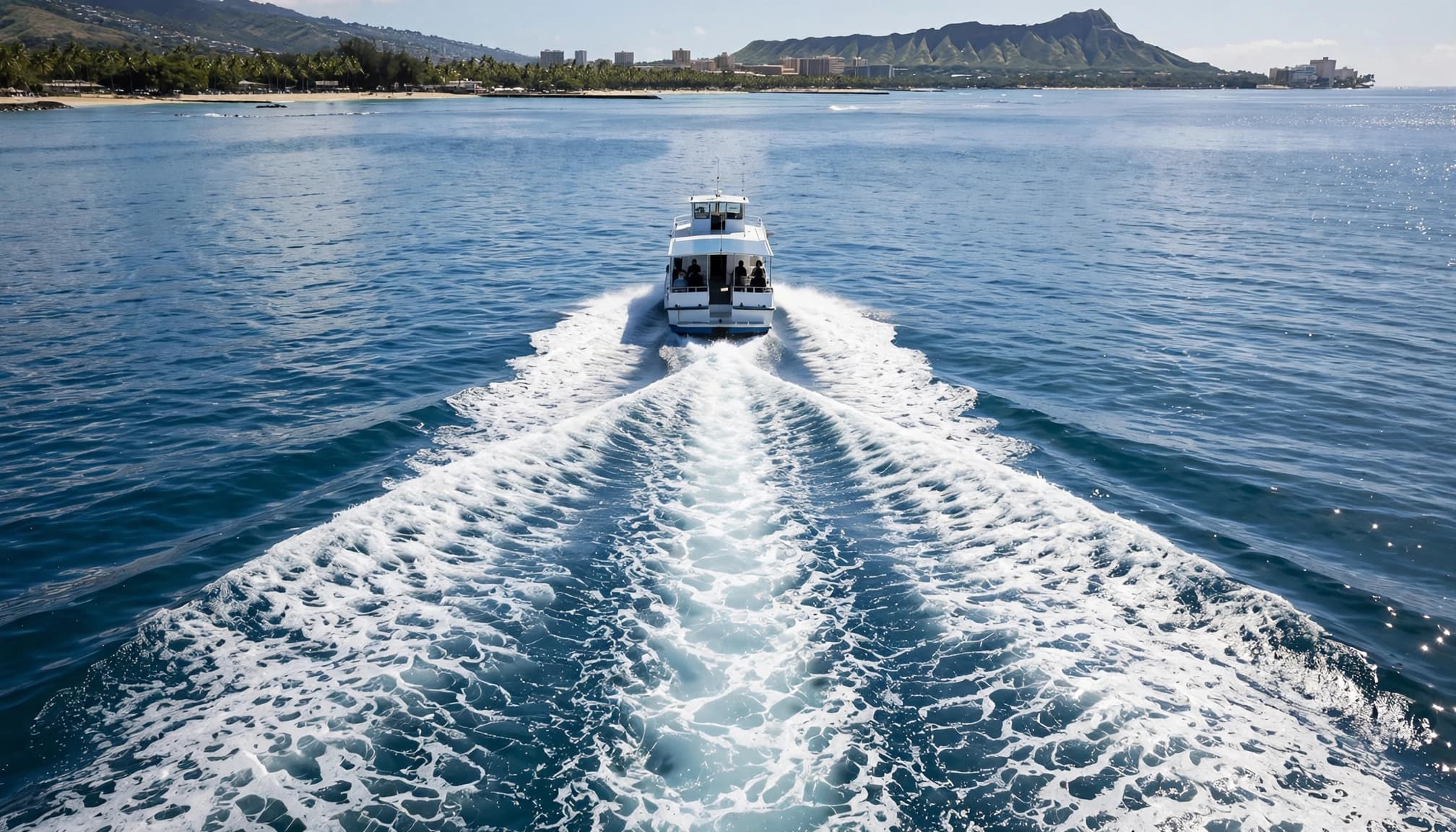
Wake and propeller wash are related, but different
A wake is the broader pattern of waves a moving hull leaves behind. It can travel outward and meet other waves, which sometimes creates a rolling motion on deck.
Propeller wash is strongest close to the stern. It is a working area, not a place for passengers or swimmers. The California State Parks propeller safety guidance stresses the value of passenger awareness around propulsion and safe boating behavior.
Why the water can look rougher than the ocean
White water behind the boat doesn’t always mean rough ocean conditions. The propeller introduces air into the water, which creates bubbles and a foamy surface. A calm morning can still produce a bold-looking wash as the boat moves away from the harbor.
Your crew watches both the visible wash and the wider water conditions. Wind, swell, traffic, and currents all affect how the boat rides.
What You May Feel on Deck
A well-run boat ride still has motion. When the captain changes speed, turns toward Diamond Head, or crosses another vessel’s wake, you may notice a brief lean, vibration, or bounce.
These shifts are normal on the water. They are also why the crew may ask you to stay seated during departure, hold a rail while moving, or wait before using stairs. On a double-decker boat, the upper deck often gives you a wide view, while a lower central seat can feel steadier.
Keep your feet planted when the boat begins moving. Place drinks, hats, and loose bags where they won’t slide. If you are holding a child, sit together rather than standing near a rail.
A boat can feel calm one moment and lively the next after crossing another vessel’s wake. Wait for the deck to settle before standing or changing seats.
The crew may redirect you to a different seat when conditions shift. That isn’t a disruption to your experience. It is a practical choice based on the boat’s movement and your comfort.
How Captains Read Waikiki Water Conditions
The captain sees much more than blue water and a clear skyline. Before and during the trip, the crew weighs wind direction, swell period, nearby vessels, cloud cover, harbor traffic, and how guests are handling the motion.
Conditions near Waikiki can change across a short distance. A sheltered area near shore may feel gentle, while open water farther along the coast can have a stronger breeze or crossing swell. The route is never a fixed script.
Speed and direction are safety decisions
A captain may slow down to cross a wake smoothly, alter course around traffic, or choose a protected heading when wind picks up. You might not notice every adjustment, but each one affects the vessel’s ride and the strength of the wash behind it.
For that reason, don’t pressure the crew to stop for an unscheduled swim or turn back early. Tell a deckhand if you feel unwell or worried. Then let the captain make the operational decision.
The U.S. Coast Guard explains how engine cut-off devices and propeller safety help reduce risks around propulsion. On a passenger trip, your part is simpler: follow directions and stay clear of restricted areas.
Harbor rules matter as much as open water
Kewalo Basin has boat traffic, docks, narrow passages, and changing currents. The captain may give firm instructions while leaving or entering the harbor because there is less room to maneuver.
Stay out of walkways during docking. Keep personal items close, and don’t crowd the rail for a photo. If a deckhand asks you to sit or move, act promptly and calmly.
Propeller Wash Before a Snorkel Stop
A snorkeling stop begins long before anyone enters the water. The captain positions the boat, checks conditions, and manages the vessel’s movement. Deckhands then prepare the entry area, organize gear, and keep the ladder clear.
You should never enter the water until the crew gives permission. The boat’s movement, its location, and its engine status are all part of that decision. Swimming near the stern without instruction is unsafe, even if the water looks inviting.
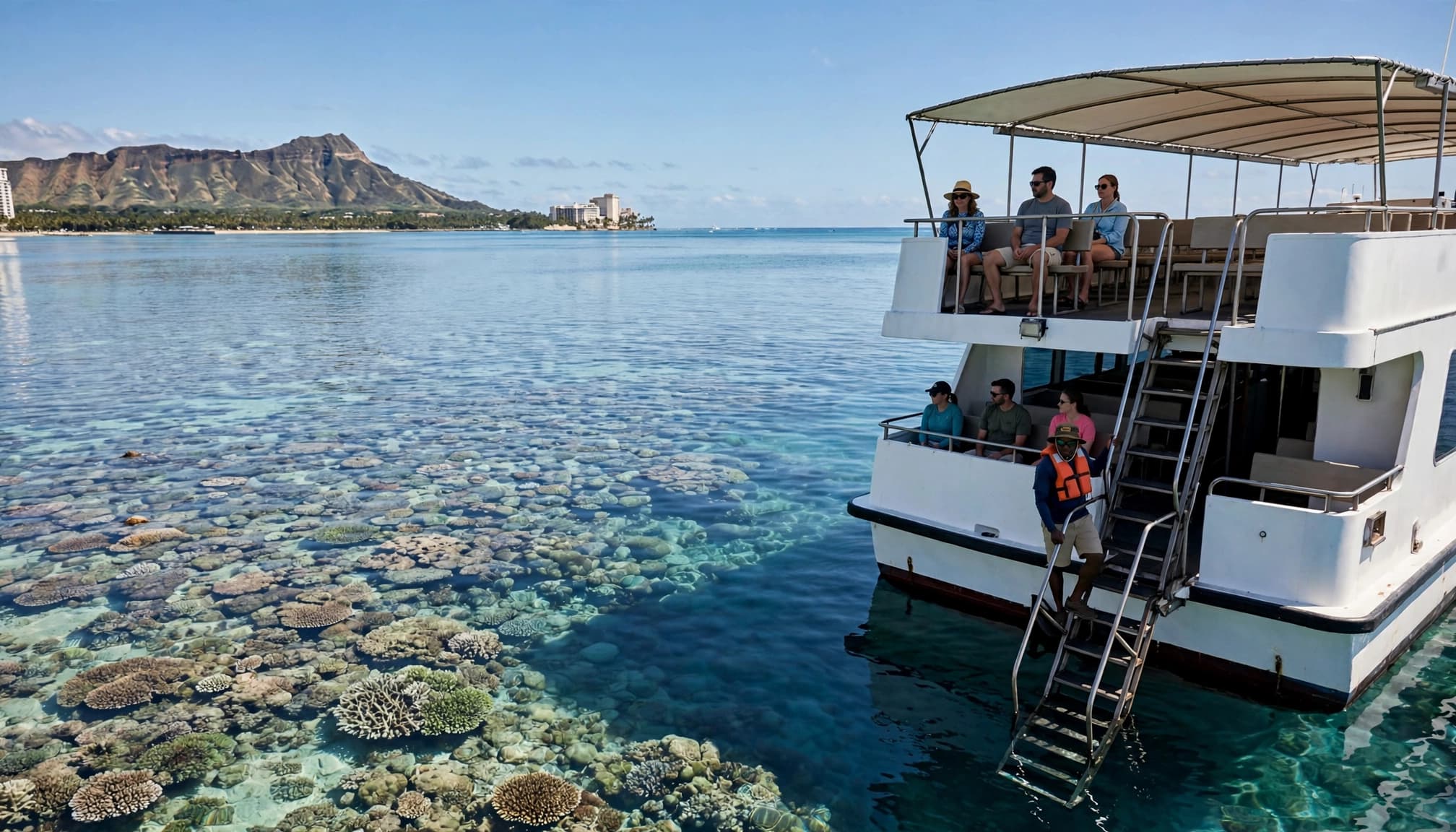
Wait for the complete entry briefing
Before you use the swim step, listen for the plan. Your crew will tell you where to sit, when to put on fins, how to descend the ladder, and where to gather in the water.
Avoid rushing because another guest has started down. A clear flow at the ladder keeps fins, masks, and people from tangling. If you need help with a mask strap or fin fit, ask before you reach the platform.
The return to the boat deserves equal care
Tired legs can make a ladder feel taller after snorkeling. Approach the designated side, wait for the deckhand’s signal, and use the heavy-duty ladder at your own pace.
Keep your mask and snorkel secure while you climb. Once you’re aboard, move away from the entry point so the next swimmer has room. The crew counts guests and watches the water, so a clear platform helps everyone.
Your Safe Habits While the Boat Is Underway
Your actions make a real difference on any boat tour in Waikiki. The best habits are simple, and they let you enjoy the coastline without creating a hazard for another guest.
First, use handrails whenever you move between decks. Wet steps, a sudden wake, or a turn can change your balance faster than expected. Keep one hand free for the rail instead of carrying several loose items.
Keep pathways and working areas clear
Stow towels, bags, fins, and toys where the crew directs. A crowded deck can become slippery, especially after swimmers return aboard. Deckhands need open paths to help guests, monitor equipment, and respond quickly if conditions change.
Children should stay close to the adults traveling with them. Give them a clear seat and a simple rule: wait for a crew member before approaching stairs, ladders, or gates.
Respect the stern and swim platform
The back of the boat is an active area. Crewmembers use it for boarding, gear handling, and supervised water entry. Never lean over a stern rail, reach toward the water, or try to retrieve an item without telling the crew.
If something falls overboard, point it out. A deckhand will decide the safe response. Reaching or jumping after an item can put you near hazards that aren’t obvious from the deck.
Staying Comfortable When the Boat Moves
Motion sickness can affect experienced travelers as well as first-time boat guests. You may feel better by choosing a lower, central seat where the boat’s motion is usually less noticeable. Fresh air and a view of the horizon also help many passengers.
Eat lightly before departure, drink water, and avoid reading or staring at a phone while underway. If you use over-the-counter motion-sickness medication, follow the product directions and take it early enough to work.
Tell the crew before the boat leaves if you are prone to seasickness. They can suggest a practical seating option and check on you during the trip. Speak up when symptoms begin rather than waiting until you feel miserable.
Hawaii’s official snorkeling safety guidance also advises checking conditions before entering the ocean. A tour crew does that work continuously, but you should still be honest about your swimming ability, comfort level, and energy.
Wildlife Viewing Requires Space and Patience
Propeller wash is part of why responsible operators manage every approach with care. Boats need controlled movement around reefs, swimmers, and wildlife. You should never assume a captain can pull closer to a turtle, dolphin, or whale on request.
At Turtle Canyons, Hawaiian green sea turtles may use reef areas as natural cleaning stations. Seeing one in the water can be unforgettable, yet the right response is to float calmly and give it room to move.
Observe, do not touch
Coral is alive, and sea turtles are protected wildlife. Keep your fins off the reef, avoid standing on coral, and never chase or touch an animal for a photo.
NOAA’s Hawaii marine wildlife viewing guidelines state that you should not touch, chase, or feed wild animals. Your guide can help you spot marine life without disrupting it.
A relaxed horizontal float protects the reef better than standing upright and sculling near the bottom. Gentle kicks also prevent sand from clouding the water for other snorkelers.
Evening Cruises Need Extra Awareness
Sunset and fireworks trips offer a different kind of Waikiki boat experience. The air cools, city lights begin to glow, and the ocean becomes harder to read. Propeller wash may be less visible after dark, but it still affects the boat’s operation.
During an evening cruise, move deliberately. Wait until the boat has settled after a turn or wake, use the rail, and keep aisles open. Wet decks deserve more attention in low light.
Keep bright screens away from the helm
Your phone’s flashlight or a bright camera screen can interfere with night vision, especially near the captain’s working area. Keep your screen dim and avoid flash photography unless the crew says it is appropriate.
Navigation lights help other boats understand a vessel’s position and direction. Decorative deck lights help you walk safely. Personal lights should not compete with either one.
If you are choosing among Waikiki snorkeling and wildlife cruises, a sunset outing, or a fireworks cruise, select the experience that fits your group’s comfort level. Families with young children may prefer a daytime departure, while couples may enjoy the slower pace of an evening ride.
Why a Professional Crew Changes the Experience
Living Ocean Tours pairs ocean adventure with practical support. Its Coast Guard-inspected Coral Kai and Lokahi vessels offer shaded seating, onboard restrooms, dry storage, and sturdy boarding ladders. The Lokahi also has a SeaKeeper stabilization system that reduces rolling motion for a steadier ride.
Professional snorkel guides help beginners fit masks, adjust fins, review breathing techniques, and feel comfortable before entering deeper water. Deckhands watch the ladder, count returning swimmers, clear walkways, and keep an eye on changing conditions.
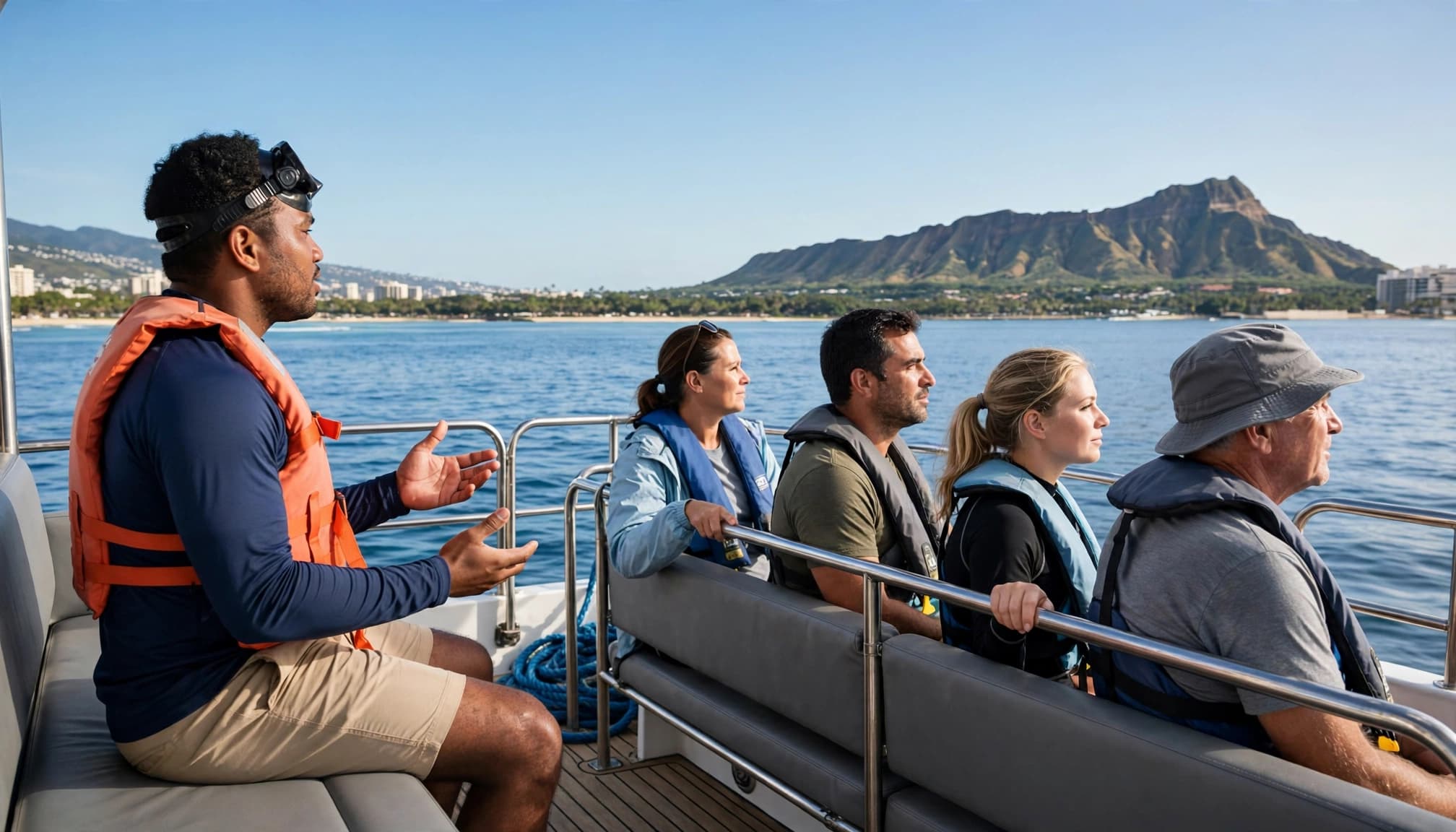
For a turtle-focused snorkeling experience, choose a departure where you can listen closely, enter the water with guidance, and return to the boat without pressure. You can reserve your place for a guided Waikiki reef outing through CHECK AVAILABILITY.
A Safer Ride Starts With Listening
Propeller wash is simply part of how a boat moves through the Pacific. It becomes a passenger concern only when people ignore working areas, rush a water entry, or disregard a captain’s instructions.
When you stay seated during maneuvering, use handrails, wait for the crew’s signal, and give wildlife space, you help create a more relaxed trip for everyone. Respect for the boat, the crew, and the ocean leaves you free to enjoy Waikiki’s coastline with confidence.


