
Boat Tour Waikiki: Why Captains Use VHF Radios
When you search for a boat tour Waikiki families can enjoy, the view is only part of the decision. Your captain also needs reliable communication with nearby vessels, harbor staff, emergency services, and other maritime professionals.
A VHF radio helps your crew manage changing conditions while you enjoy the water. You may barely notice it during a calm cruise, but it supports many decisions that keep your outing organized and safe.
Why a boat tour Waikiki needs VHF communication
VHF stands for very high frequency. A marine VHF radio is built for communication on the water, where ordinary phone service can be limited, inconvenient, or too slow for shared updates.
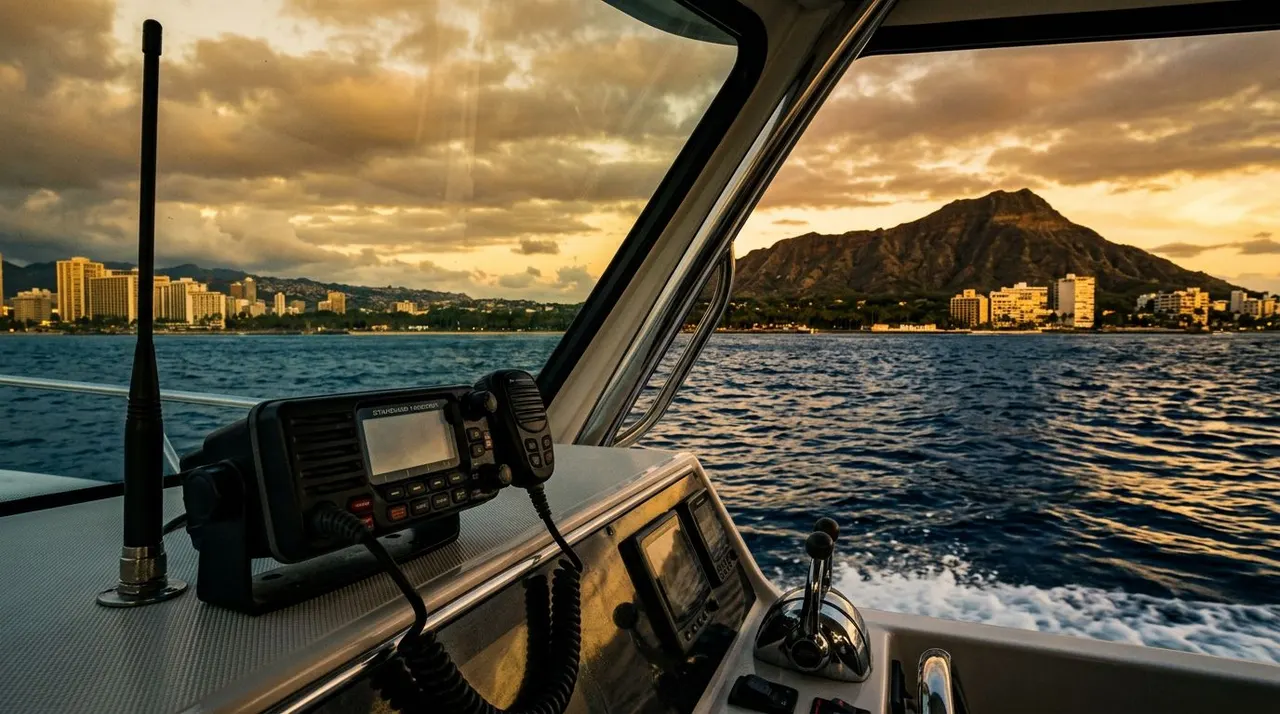
The radio sits at the helm, where the captain can listen and speak while operating the boat. A fixed-mount unit usually connects to an antenna above the deck. That height helps the signal travel across open water, although range still depends on antenna height, power, weather, and nearby land.
Unlike a cell phone, a VHF radio can connect one vessel with many listeners at once. A captain can share a warning with nearby boat operators instead of calling each person separately. Other captains can also hear the exchange and adjust their routes.
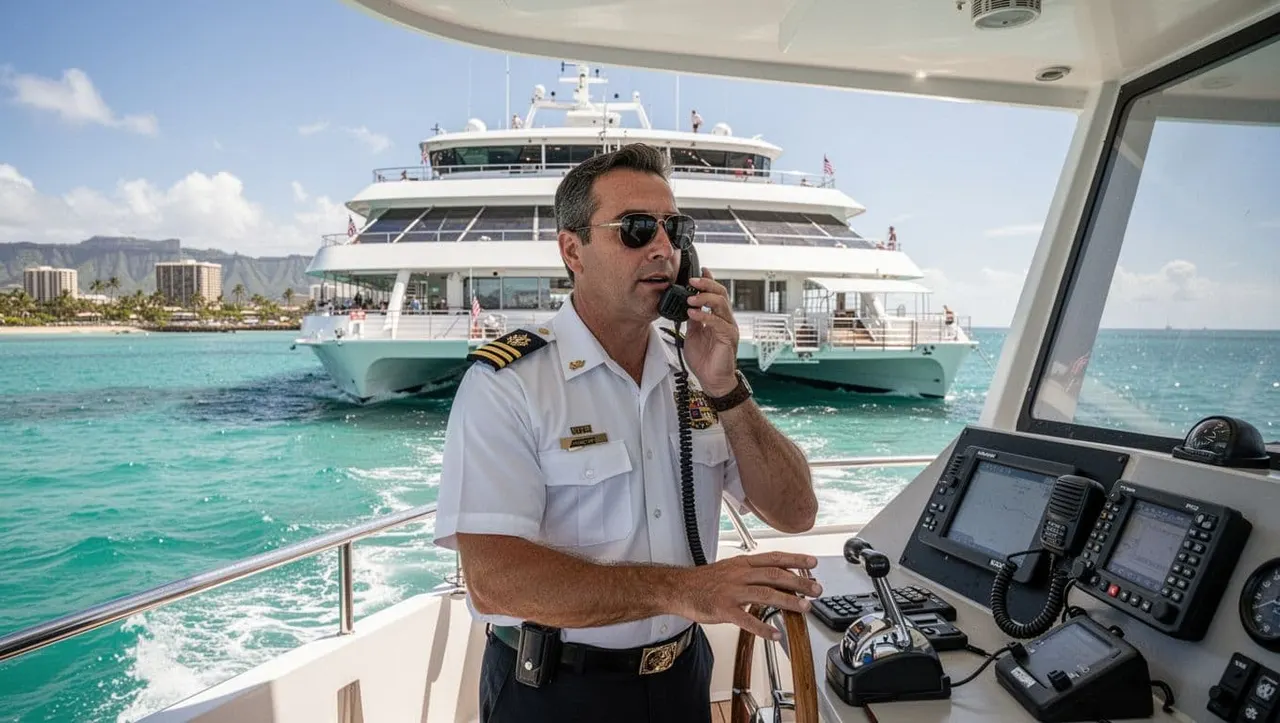
The radio also gives captains access to standard maritime communication practices. Crew members learn how to identify their vessel, state a position, describe a problem, and request help using clear language. That structure matters when several boats share the same channel.
A phone call can still help in some situations. However, a phone depends on a network, a known number, a charged battery, and a dry screen. A VHF radio is designed around the needs of boat operators, including shared channels and emergency procedures.
What makes a marine radio different from a cell phone?
A cell phone connects you with a specific person or number. A VHF radio connects you with a channel that other vessels and maritime stations may monitor.
That difference becomes important around a busy coastline. If a captain spots floating debris, a disabled boat, or a sudden navigation concern, a radio broadcast can reach multiple vessels in the area. The captain doesn’t need to know every nearby boat’s phone number.
Marine radios also use short, direct exchanges. Captains avoid long conversations because other boaters may need the same channel. The goal is to share useful information quickly, then move routine communication to an appropriate working channel.
The BoatUS Foundation’s marine communications guide explains why VHF remains a central tool for boat safety and coordination. In Coast Guard jurisdictions, important channels receive regular monitoring, which gives captains another way to request assistance.
A radio does have limits. VHF signals generally travel by line of sight, so hills, buildings, and the curvature of the earth can affect reception. A radio also won’t replace a proper lookout, navigation equipment, engine checks, emergency gear, or a trained crew.
You should view VHF as one part of a larger safety system. A professional captain listens, watches, navigates, checks conditions, and communicates before a small concern becomes a larger problem.
How radios support safety near Waikiki
The waters near Waikiki connect several active areas. Boats depart from Kewalo Basin, move along the Waikiki coastline, and share the ocean with fishing vessels, sailboats, paddlers, personal watercraft, and other tour operators.
That traffic changes throughout the day. A captain may need to monitor nearby movement while also watching the route, the passengers, the weather, and the water around the vessel. VHF communication helps the captain build a broader picture of what is happening beyond the boat’s own deck.
Harbor traffic requires clear coordination
Departures and returns often require more attention than a passenger realizes. The captain must account for other vessels entering or leaving the harbor, changing wake patterns, restricted areas, and traffic that may be difficult to see from a lower deck.
Radio communication can help a captain coordinate with harbor personnel or nearby operators. It can also alert the crew to a vessel that is moving slowly, experiencing mechanical trouble, or approaching from an unexpected direction.
Captains still rely on their eyes and navigation equipment. A radio report is useful information, not permission to stop paying attention. The safest operation combines communication with a continuous visual watch.
When you book a boat tour Waikiki visitors often choose for its coastline views, you may focus on Diamond Head and the water below. Meanwhile, the captain is tracking details that help the trip stay comfortable and orderly.
Weather updates help crews make timely choices
Hawaii’s ocean conditions can change during a day. Wind direction, wave height, rain, visibility, and current can affect a route or a planned water activity.
VHF radios can carry weather information, navigational warnings, and reports from other boat operators. A captain may use those updates alongside forecasts, onboard observations, and official harbor guidance.
The radio doesn’t predict every change. Conditions still require direct observation. A crew member may watch cloud movement, whitecaps, rain squalls, and the behavior of nearby boats before the captain adjusts course or activity plans.
Those choices can affect your experience. A captain may slow down, change direction, delay water entry, or return earlier than planned. A responsible operator treats those decisions as part of good seamanship, not as an inconvenience.
What your captain actually does with the radio
A VHF radio is only useful when the person operating it understands proper radio procedure. Captains must know when to listen, when to transmit, which channel to use, and how much information to provide.
You may hear brief exchanges during a cruise. The language can sound formal because it follows a shared system. That consistency helps prevent confusion between vessels with different crews and backgrounds.
Listening comes before transmitting
Captains listen for relevant traffic before making routine calls. They may hear another vessel report its position, request assistance, announce a hazard, or coordinate movement near a harbor.
Listening also prevents a crew from interrupting an urgent exchange. Marine radio channels are shared, so unnecessary transmissions can block someone who needs to communicate.
For everyday communication, captains identify their vessel and the station they want to reach. Once contact is established, they may shift to a working channel so the main calling channel remains available.
The marine radio basics guide provides a plain-language explanation of how boaters use marine radios for navigation, safety, and coordination. You don’t need to operate the radio as a passenger, but understanding its role can make the equipment at the helm less mysterious.
Emergency calls use structured language
Marine radio procedures use different urgency levels. A Mayday call indicates grave and immediate danger. A Pan-Pan call communicates an urgent situation that doesn’t meet the threshold for immediate life-threatening distress. A Securite call shares important safety information, such as a hazard or navigation warning.
The captain’s message should give responders the information they need. That can include the vessel’s name, location, nature of the problem, number of people aboard, and the kind of assistance required.
A clear position is especially important. The crew may use GPS coordinates, a known landmark, a harbor entrance, or another recognizable reference. In the waters off Waikiki, a captain may describe a position in relation to the coastline, Diamond Head, Kewalo Basin, or another nearby feature.
Good communication reduces guesswork. Responders can prepare the right equipment, nearby vessels can keep clear, and the crew can give passengers accurate instructions.
The radio doesn’t guarantee an instant rescue. Response time depends on location, conditions, traffic, and the kind of assistance needed. It does give the captain a direct maritime channel for requesting help and updating others.
The EC-001 emergency communications course also covers the role of marine radio communication aboard vessels. Training matters because the value of a radio depends on correct use under pressure.
What VHF communication means for you as a passenger
You probably won’t spend your cruise listening to radio traffic. The captain or crew keeps communication brief and focused, and passengers may only hear occasional calls from the helm.
That quiet operation is a positive sign. The radio supports the trip in the background while the crew focuses on your comfort, the route, and the marine environment.
Before departure, your crew should still provide a safety briefing. Pay attention to the location of life jackets, handrails, boarding ladders, restrooms, shaded seating, and any instructions for water entry. Ask questions if you aren’t comfortable in the water or don’t understand a procedure.
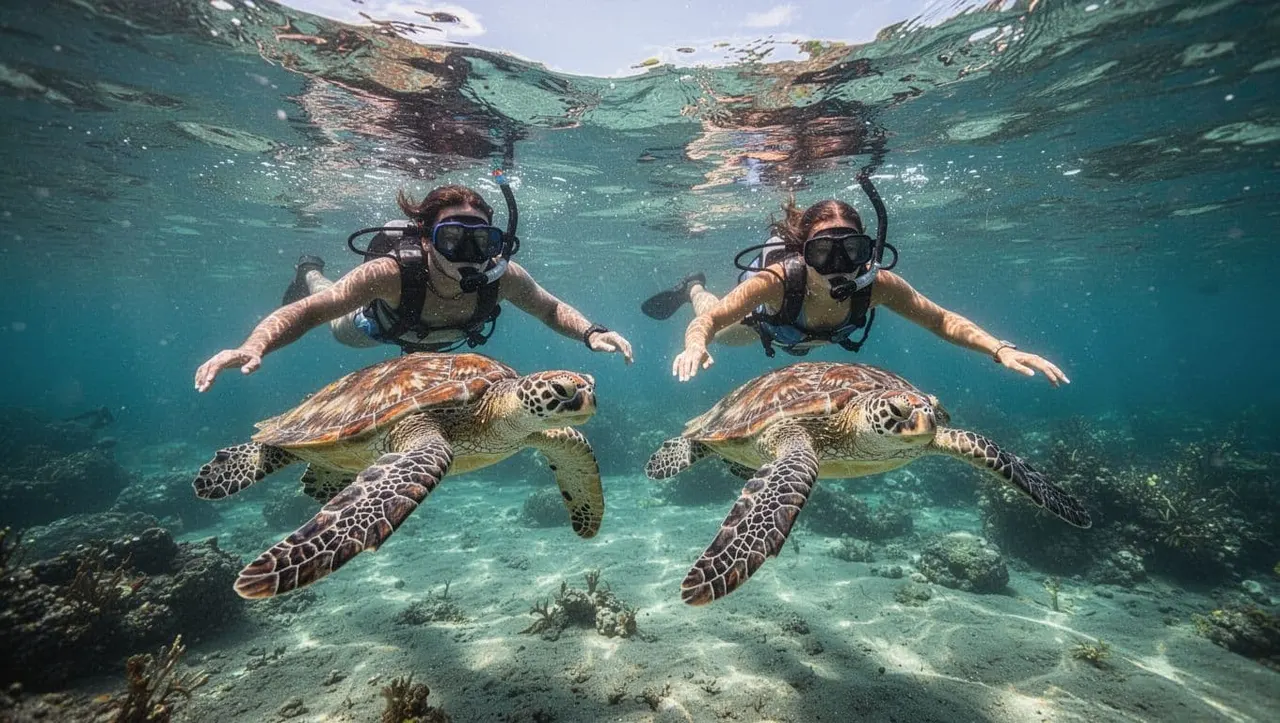
Professional guides also help you enjoy marine life responsibly. During a snorkeling activity, you should observe animals without touching, chasing, feeding, or blocking their path. The same crew that explains reef etiquette should also know how to respond if conditions change.
Families can benefit from this layered approach. A child may need help with a ladder or flotation equipment, while an adult may want reassurance about water depth. The captain handles vessel operation, and trained crew members support guests on deck and in the water.
If you are new to snorkeling, tell the crew before entering the water. A professional snorkel guide can explain how to use your mask, how to breathe through a snorkel, and how to conserve energy. You don’t need advanced skills to enjoy a guided excursion.
The radio is one part of that support. It handles communication beyond the boat, while the crew handles the people aboard it.
How to choose a boat tour Waikiki with safety in mind
When you compare a boat tour Waikiki families can enjoy, look beyond the departure time and advertised activities. A comfortable experience starts with an operator that takes preparation seriously.
Consider these practical questions before booking:
- Does the operator explain its safety procedures before departure?
- Are the vessels Coast Guard-inspected, where applicable?
- Does the crew include people who can guide beginners in the water?
- Are life jackets, restrooms, shade, dry storage, and safe boarding equipment available?
- Does the company explain what happens if weather or ocean conditions affect the itinerary?
- Can the captain communicate with nearby vessels and emergency services?
- Does the crew teach guests to observe marine life without touching it?
A professional operator should answer these questions clearly. You don’t need a technical lecture about every piece of equipment, but you deserve straightforward information about the trip.
Vessel comfort also affects safety. A steady deck makes it easier for you to walk, listen to instructions, and move toward a boarding ladder. Shaded areas help you manage sun exposure, while dry storage keeps personal items from becoming a distraction.
Crew experience matters just as much. A captain manages the boat, but a strong crew also watches passengers, helps with equipment, monitors water entry, and communicates instructions in a calm voice.
Living Ocean Tours puts trained crew and vessel comfort together
Living Ocean Tours operates from Kewalo Basin Boat Harbor, a short distance from Waikiki Beach in Honolulu. The company offers guided ocean experiences along the Waikiki coastline, with an emphasis on safety, marine respect, and welcoming service.
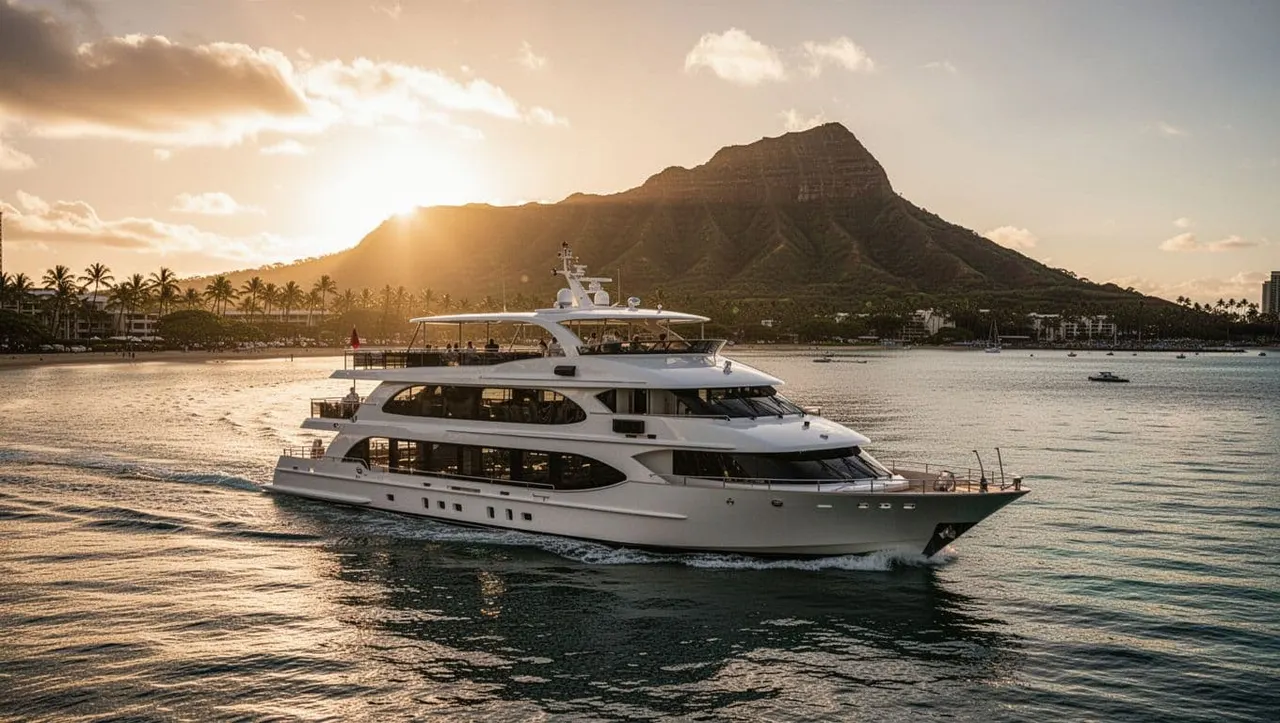
Its Coast Guard-inspected, custom-built double-decker vessels include the Coral Kai and the Lokahi. The Coral Kai provides open-deck space for ocean views. The Lokahi includes shaded seating, a cash bar, an upper-deck waterslide, and a SeaKeeper stabilization system designed to reduce rolling.
Both boats offer onboard restrooms, dry storage, and heavy-duty ladders for easier water entry. Those features matter when you are traveling with children, managing snorkeling equipment, or returning aboard after time in the water.
Living Ocean Tours is also the only tour company with professional snorkel guides. That support is useful for first-time snorkelers, families with children ages 3 and older, and experienced swimmers who want local guidance near the reef.
You can explore Living Ocean Tours to compare guided snorkeling, wildlife, sunset, fireworks, whale watching, and private charter options. Each outing gives you a different way to experience the Pacific, but the same basic questions about crew training and communication still apply.
When you choose a boat tour Waikiki visitors can enjoy with confidence, ask how the captain and crew prepare for changing conditions. A VHF radio won’t be the only answer, but it shows that the operator understands the need for communication beyond the passenger deck.
Why radio awareness builds a better ocean experience
You may never need to think about the VHF radio during a smooth cruise. Still, its presence gives your captain a reliable way to share information, receive warnings, and request help when needed.
The best boat operators pair radio communication with trained crew, careful navigation, weather awareness, passenger briefings, and respectful wildlife practices. No single device replaces good judgment. Together, these habits create a safer setting for snorkeling, sightseeing, and relaxing offshore.
A boat tour Waikiki guests remember should offer more than a beautiful horizon. It should give you confidence that the captain and crew are prepared for the conditions around you. The next time you see a radio at the helm, you’ll know it is one of the tools helping your crew keep the journey on course.
Conclusion
A VHF radio gives your captain shared communication with nearby boats, harbor contacts, and emergency services. It supports decisions about traffic, weather, route changes, and assistance while you enjoy the coastline.
When you choose a boat tour Waikiki families can enjoy, look for more than scenery. Choose a company with trained crew, suitable vessels, clear safety procedures, and a strong respect for Hawaii’s marine environment. A calm cruise begins with preparation long before you notice the first wave.


