
Boat tour restroom access: Questions before booking
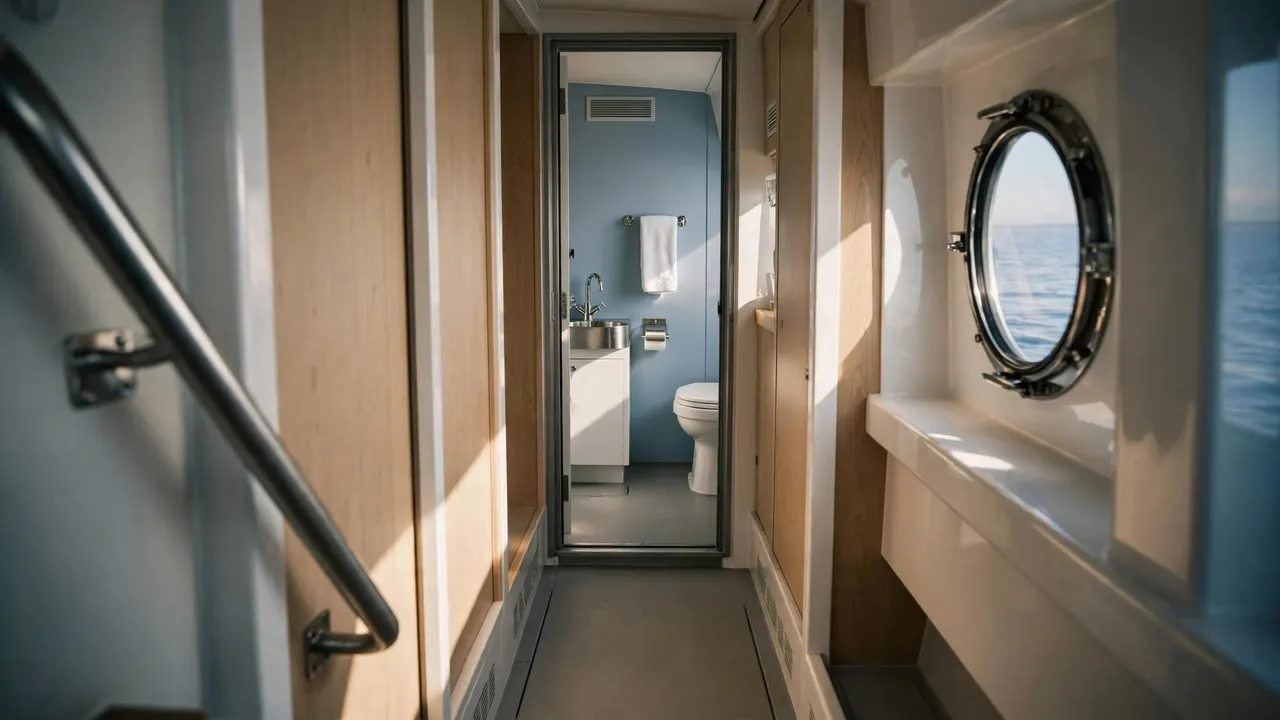
You shouldn’t have to spend your ocean adventure worrying about where you’ll find a bathroom. Your boat tour restroom questions deserve clear answers before you reserve, especially when you’re traveling with children or need extra space.
At Living Ocean Tours, we want you to feel comfortable discussing those everyday needs. The most useful detail is usable access, including the route to the restroom and room for any assistance you need.
Start with the boat itself, then consider how its layout fits your group.
Key Takeaways
A restroom listing gives you a starting point, but your comfort depends on the details.
- Distinguish an onboard toilet from facilities available only before boarding.
- Consider steps, doorways, and space for assistance when someone has mobility needs.
- Treat changing space and diaper-changing facilities as separate amenities.
- Learn the restroom location during boarding, then follow crew directions when moving around the boat.
Start with the right boat tour restroom question
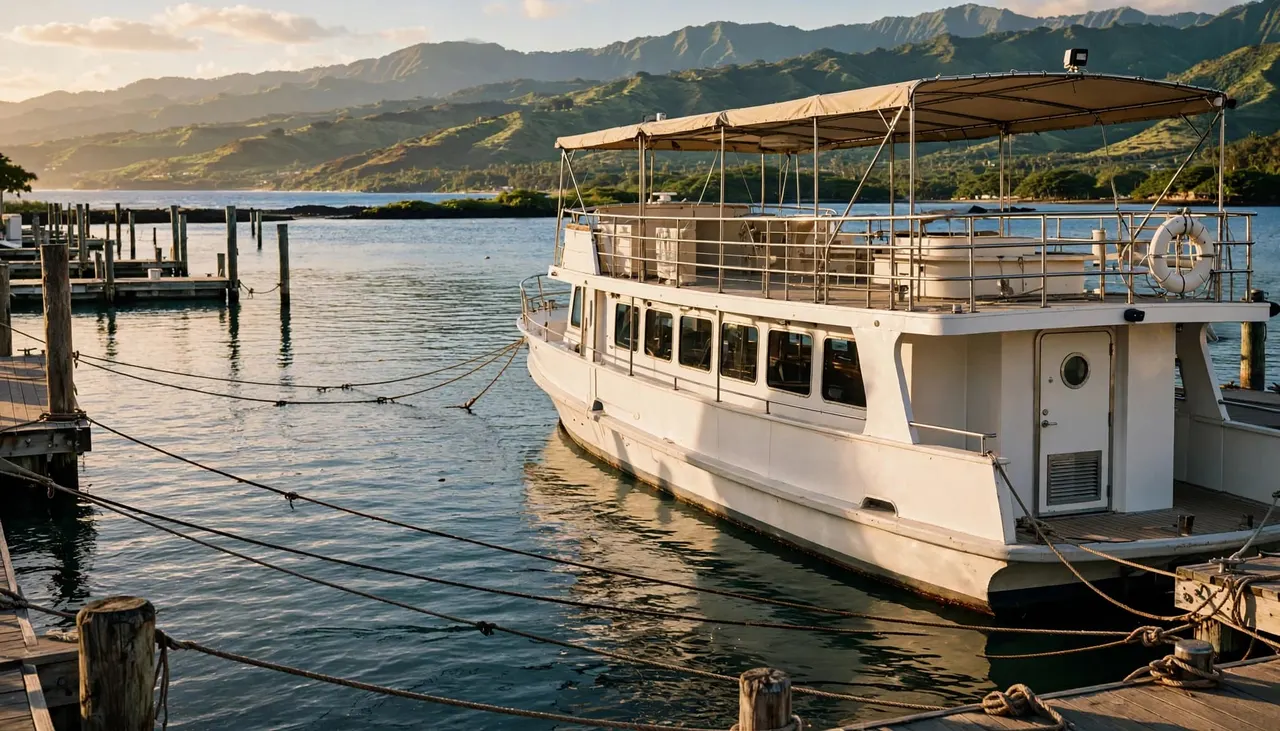
Deck and restroom layouts differ between sightseeing vessels.
Is the restroom actually aboard?
The clearest opening question is: “Does the boat used for this departure have an enclosed onboard toilet?”
That wording separates an onboard facility from a bathroom at the departure area. It also avoids relying on descriptions such as “guest facilities,” which don’t identify where the toilet is.
Your boat tour restroom question should focus on the vessel, rather than the departure location. A shore-side bathroom helps before boarding, but it doesn’t provide access once you’re underway.
Don’t assume every passenger vessel must carry toilets. For example, federal passenger-accommodation regulations include a narrow exception for ferryboats and barges with short runs.
Does the description identify a particular boat?
A fleet description can combine amenities across several vessels. Meanwhile, photographs may show only one boat or concentrate on its open deck.
The useful question is: “Does that restroom description apply to the boat assigned to this departure?”
Read the wording carefully. “Our fleet includes” and “this vessel has” make different promises. For your comfort, the second description provides more useful information.
A double-decker design alone doesn’t tell you which deck contains the restroom or whether stairs separate it from your seat.
Separate safety credentials from restroom comfort
Safety credentials matter, but they answer different questions than restroom descriptions. Inspection status alone doesn’t establish doorway width, changing space, or accessibility for your needs.
The U.S. Coast Guard’s sanitation guidance states that the agency doesn’t certify or approve vessel toilets or urinals. Those fixtures remain subject to applicable marine engineering requirements.
Therefore, treat broad safety language and personal-comfort details separately. A statement about an inspected vessel doesn’t answer whether you can reach its toilet without climbing stairs.
You also don’t need to judge a boat’s plumbing yourself. Your concern is practical: can you use the facility privately and manage the route comfortably?
An onboard toilet and an accessible onboard toilet are separate claims. Neither a spacious deck nor inspection status establishes the second.
That distinction matters most when someone needs assistance, uses a mobility aid, or finds narrow spaces difficult.
Look at the route to the restroom
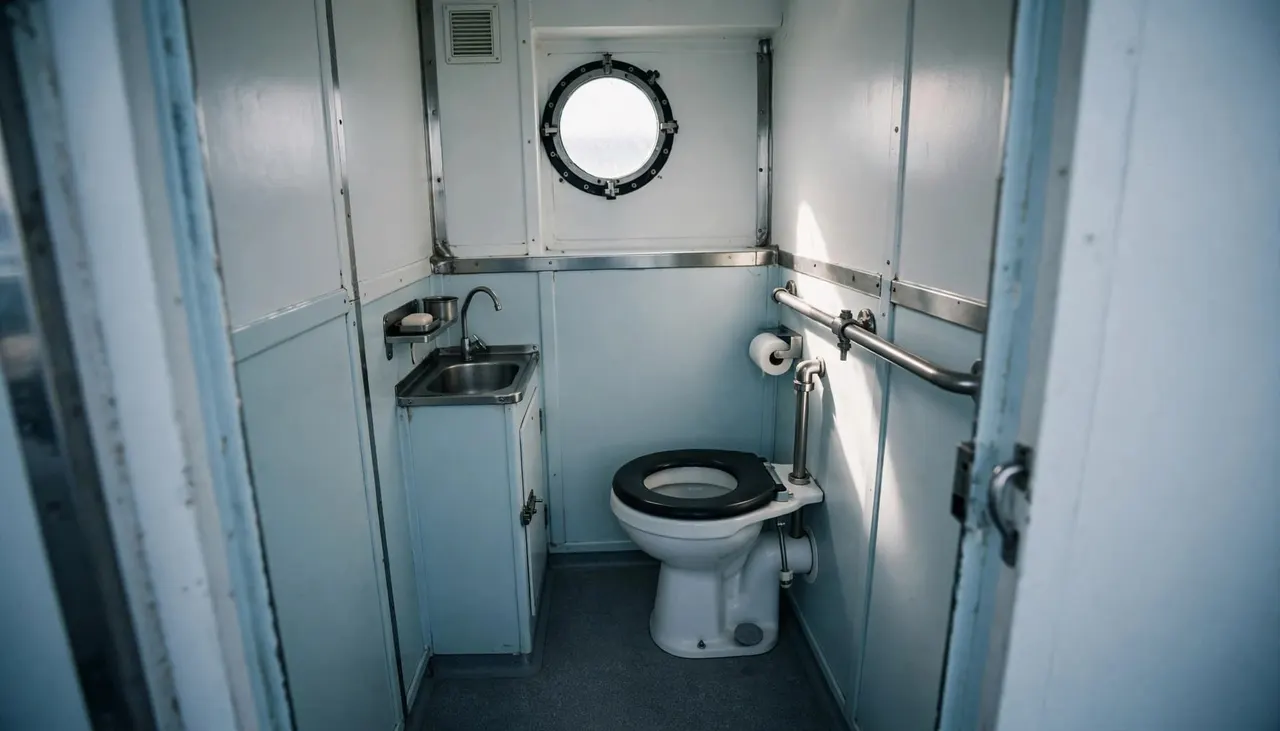
Compact marine restrooms can have limited maneuvering space.
Steps, thresholds, and doorways
A boat tour restroom may be enclosed and private while still requiring a difficult approach. The route matters as much as the room.
Useful wording is: “Are there stairs or raised thresholds between the seating area and the restroom?”
For someone with balance concerns, handrails and distance also matter. A short route with secure handholds differs from a passage that requires crossing an open deck.
If you use a wheelchair or walker, describe the aid and the access you need. The word “accessible” alone leaves too much unexplained.
A step-free route doesn’t automatically provide room to turn, transfer, or close the door.
Room for help inside
Some guests can walk to a toilet independently but need help with clothing or standing. Others need a caregiver close enough to assist throughout the visit.
The relevant question is: “Can the restroom accommodate a guest and an assisting adult?”
This also matters for parents accompanying young children. Enough room for one adult doesn’t establish enough space for two people.
You can explain the task without sharing your entire medical history. For example, saying you need help standing gives a clearer picture than saying you need “extra comfort.”
Plan for privacy, handwashing, and disposal
Privacy and changing space
A boat tour restroom can provide toilet privacy without functioning as a changing room. An enclosed door doesn’t establish enough space to remove wet swimwear comfortably.
The useful question is: “Is there room to change clothes privately, or is the space intended only for toilet use?”
For snorkeling, wearing your swimsuit beneath your clothes reduces the need for a full change aboard. A loose cover-up also makes restroom visits easier than several tight layers.
Keep dry clothes separate from wet gear. Then, if space is limited, you can avoid bringing a large bag into a small room or blocking the passage outside.
Handwashing and marine toilet rules
A toilet listing doesn’t tell you whether there is a sink, soap, or another hand-cleaning arrangement. Those details matter before eating and after helping a child.
The practical question is: “What handwashing facilities and disposal options are available?”
Marine toilets vary, so follow the operating directions given aboard. Avoid guessing at unfamiliar pumps, switches, or flush controls.
Never flush wipes, menstrual products, or diapers. Use the designated disposal arrangement instead.
A small supply pouch keeps personal items together. Hand sanitizer provides a backup, although it doesn’t replace washing visibly dirty hands with soap and water.
Make restroom breaks easier for your family
Show children the location early
Learning the boat tour restroom location during boarding removes one source of stress later. Children often give little warning, especially when they’re distracted by the water.
Point out the door and explain that you’ll accompany them when they need to go. Also identify where your group will sit, so they know where to return afterward.
A toddler’s toilet needs differ from a baby’s changing needs. “Is there a diaper-changing surface?” is a separate question from whether a toilet exists.
Don’t assume a compact sink counter is a safe changing surface. For children needing help, keep spare clothing and personal supplies easy to reach.
Move when the crew says it’s safe
Boat motion affects the walk to the restroom. Even a short passage requires more care when the vessel turns or crosses a wake.
Listen during the briefing, and follow any instructions to remain seated. If you need a restroom urgently, tell a crew member rather than trying to hurry across the deck.
Start the outing after a shore-side restroom break, and drink water steadily. Avoid restricting fluids simply to reduce bathroom visits.
If motion sickness is a recurring problem, discuss suitable prevention with a healthcare professional before your trip. Tell the crew early if you feel unwell.
Bring your comfort needs into your booking
At Living Ocean Tours, our departures leave from Kewalo Basin Boat Harbor in Honolulu, near Waikiki. You can keep your plans focused on the ocean while making space for practical needs.
For snorkeling, we’re the only tour company with professional snorkel guides. That guidance helps beginners understand equipment and safe practices before enjoying the reef.
Your restroom needs deserve the same straightforward communication as swimming concerns. Describe the assistance or space you need, rather than relying on a general label.
You don’t need to apologize for traveling with children, needing help, or wanting privacy. Those are ordinary parts of planning an outing.
Our guest reviews offer another perspective on the experience:
Choose an ocean experience that suits your group’s interests and comfort needs.
Frequently Asked Questions
Can you assume every boat tour restroom is accessible?
No. An onboard toilet doesn’t establish a step-free approach, sufficient doorway width, or transfer space. Your needs may also include grab rails or room for assistance. A general restroom listing doesn’t answer those separate access questions.
Can you change out of wet swimwear in the restroom?
That depends on the available space. Toilet privacy and changing space are different amenities. Wearing your swimsuit under your clothes and bringing an easy cover-up reduces the amount of changing you need to do aboard.
Should you tell the crew before walking to the restroom?
Follow the instructions given during boarding and the safety briefing. If the crew has directed everyone to remain seated, speak to them before getting up. Also tell them if you need assistance or feel unwell.
What should you bring for personal comfort?
Keep essential personal supplies in a small, accessible pouch. For swimming outings, separate dry clothes from wet items. Parents can include spare clothing for children. Avoid carrying unnecessary bags into the restroom or leaving belongings in walkways.
Choose comfort before you leave the dock
The right boat tour restroom questions help you understand whether the space fits your needs. Focus on usable access, including the route and room for assistance.
Once aboard, learn the layout and follow crew directions when moving around. That preparation leaves you free to enjoy the coastline instead of wondering where to go when you need a bathroom.


