
Boat Tour Group: Stay Together After Boarding

Your group can scatter within minutes of boarding, with someone finding shade while another heads toward the rail. On a Living Ocean Tours outing from Honolulu’s Kewalo Basin Boat Harbor, keeping your boat tour group connected starts with a clear meeting plan.
You don’t need everyone beside you throughout the trip. You need shared expectations about moving around, entering the water, and finding each other afterward.
Start with a crew-approved meeting spot, then build your plan around the safety briefing.
Set a Meeting Plan for Your Boat Tour Group
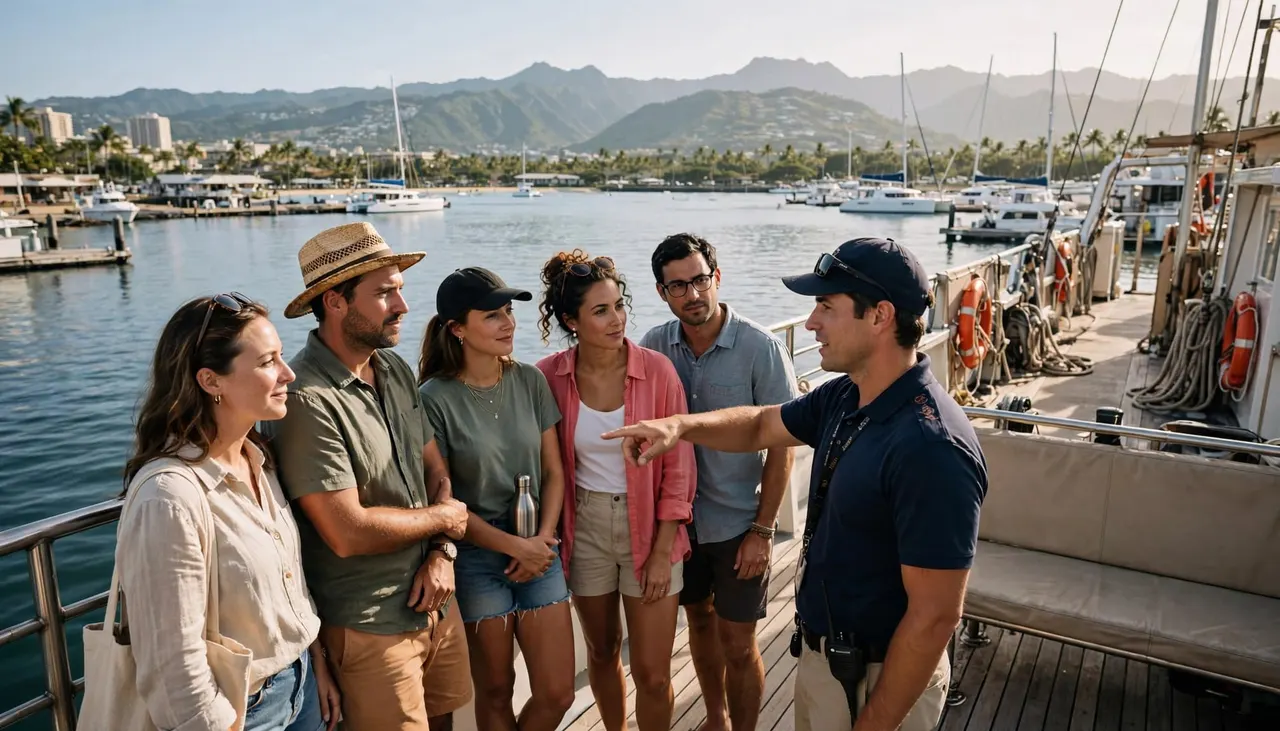
Before anyone explores the boat, pause together and get oriented. A short conversation now prevents repeated searches once the engines, wind, and ocean views compete for your attention.
Choose a Crew-Approved Home Base
Ask where your party can gather without blocking stairs, exits, or working areas. A recognizable seating area works better than “somewhere upstairs,” especially on a double-decker boat.
Check that everyone can reach the spot comfortably. If someone finds stairs difficult, your meeting place shouldn’t require changing decks.
However, treat that location as a reference point, not reserved seating. Follow the crew’s directions if you need to move, and tell your companions where your new meeting spot is.
Pick One Person to Coordinate
Choose one adult to keep track of your party’s plans. That person can confirm who’s staying aboard, who’s snorkeling, and whether anyone needs help understanding an announcement.
Your coordinator doesn’t replace the crew’s passenger count. A reservation confirms your booking, but the crew still needs to know who is physically aboard.
Before departure, tell a crew member immediately if someone checked in but stepped away. Don’t assume another companion has already passed along the message.
Give the Safety Briefing Your Full Attention
Your boat tour group should hear the briefing together whenever practical. Put phones away and pause conversations so you don’t miss instructions about seating, storage, or water entry.
The captain may adjust directions for conditions that day. Previous boating experience doesn’t tell you what this vessel needs now.
Learn the Layout Before Moving Around
Identify the restrooms, stairs, storage areas, and crew members you can approach for help. Ask where life jackets are located and how to access them.
The U.S. Coast Guard’s recreational boating guide recommends wearing approved life jackets while on the water. Inspected passenger tour boats have different requirements, so follow the instructions for your actual vessel.
Also, keep bags away from safety equipment and passages. A convenient storage spot should never make equipment harder to reach.
Confirm How You’ll Receive Instructions
Wind and engine noise can make announcements difficult to hear. Ask for a repeat before acting if you missed something.
For hearing or communication needs, request face-to-face instructions, a demonstration, or written clarification. Confirm what’s available rather than assuming every announcement has a visual backup.
Then make sure your companions understand the same plan. One person hearing an instruction doesn’t mean everyone else knows when to sit, move, or prepare for snorkeling.
Move Around the Boat Without Losing Track
Keeping your boat tour group connected doesn’t require moving as a pack. Instead, use brief updates when someone leaves the meeting area.
Say where you’re going and whether you’ll return shortly. “I’m going to the restroom, then coming back here” is more useful than disappearing without notice.
Keep Children With a Named Adult
Assign each child to a particular adult during boarding and movement around the boat. Avoid a vague arrangement where everyone assumes someone else is watching.
If adults switch responsibilities, say so directly and confirm the handoff. Meanwhile, keep children beside you around stairs and boarding points.
Ask about correctly sized life jackets and participation rules for your departure. The Coast Guard’s life-jacket safety guidance supports making fit part of your preparation.
Make Photos a Short, Shared Detour
Before heading to another viewing area, tell your partner or coordinator. Move only when the crew permits it, and keep access routes open.
You can agree to meet afterward at your home base rather than asking everyone to follow every photo opportunity.
Also, secure your phone and loose belongings. Searching for sunglasses or rearranging several bags can separate your party just as easily as changing decks.
Keep Your Group Connected During Snorkeling
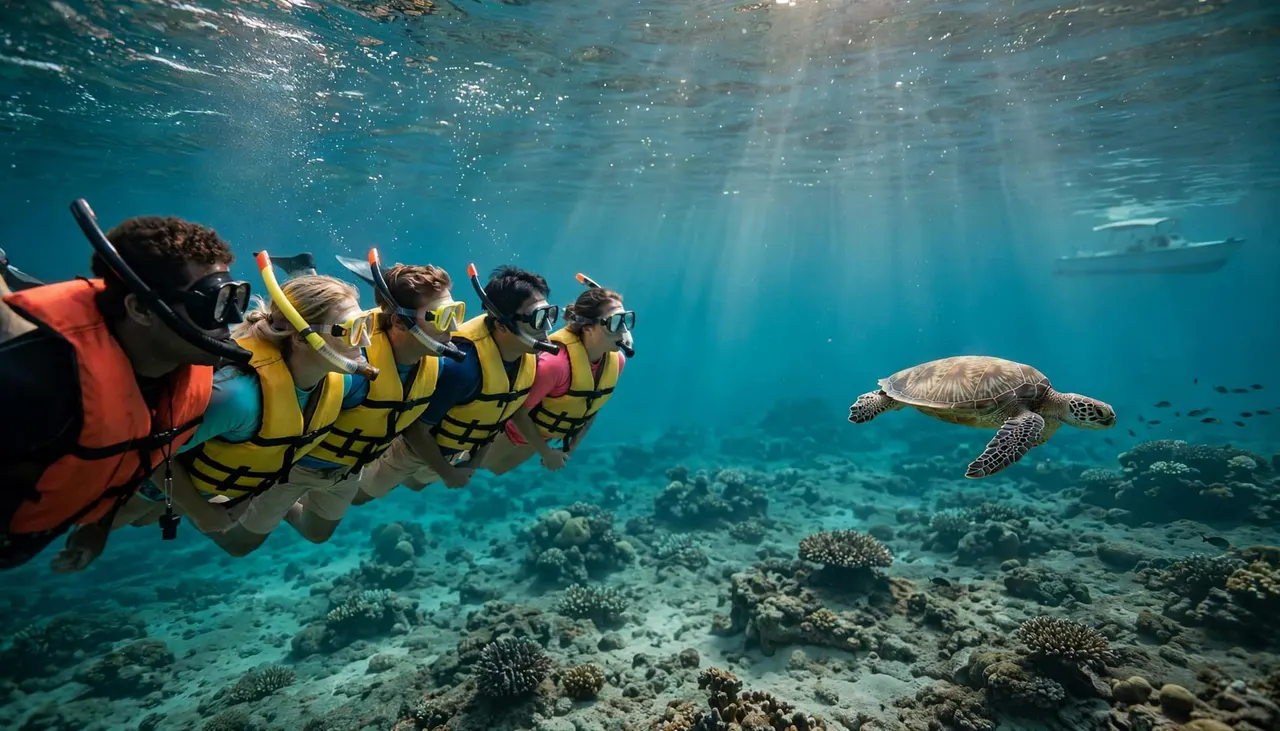
For a boat tour group entering the water, the plan needs more detail than a meeting seat. Before anyone reaches the ladder, ask about buddies, guide positioning, help signals, and reboarding.
Match Buddies by Comfort Level
Choose companions who are comfortable moving at a similar pace. Don’t expect a nervous beginner to follow your strongest swimmer.
Tell the crew about swimming concerns before entering. Ask for help with mask fit and flotation, and confirm whether anyone who prefers to stay dry can remain aboard.
Your buddy arrangement should support the guide’s directions. It shouldn’t encourage your party to separate from the guided activity or swim farther to stay together.
Agree on Signals and the Return Plan
Ask the guide to demonstrate how to request assistance. Also, confirm what to do if your mask leaks, you feel cold, or swimming becomes tiring.
Tell your companions if you decide to finish early, then return according to crew instructions. Nobody should assume you’re still beside them after you’ve reboarded.
If you lose sight of your buddy, alert the guide instead of swimming away to search.
Around Hawaiian green sea turtles, observe without touching or chasing. Following an animal can pull you away from your companions and the guide.
Once aboard, return to your agreed meeting area when directed. That makes it easier for your party to reconnect without gathering around the ladder.
If Someone Is Missing, Tell the Crew Promptly
When you can’t locate someone, involve a crew member rather than sending several guests around the boat. Explain who you’re looking for and where you last saw them.
Give useful details, such as their name, clothing color, and whether you believe they’re aboard or in the water. Separate what you know from what you’re guessing.
If you’re snorkeling, signal the guide and follow the response instructions. Don’t attempt an independent search or ask another swimmer to leave the group.
The guide may direct you to remain nearby, regroup, or return to the boat. Following that direction helps the crew account for everyone without adding another missing person.
Similarly, report dizziness or unsteadiness early. Tell the crew who you’re traveling with and where that companion is, then avoid crossing the deck alone.
Prompt communication matters more than trying to solve the situation yourself. Keep pathways clear and let the crew direct the response.
After you reconnect, tell everyone who knew about the separation. Otherwise, a companion may keep searching while the rest of your party has already settled down.
Choose an Outing That Supports Your Group’s Needs
With Living Ocean Tours, you can discuss your party’s needs before departure from Kewalo Basin, near Waikiki. Explain mobility concerns, swimming confidence, and any communication support you need.
The company’s double-decker Coral Kai and Lokahi have shaded seating, onboard restrooms, dry storage, and water-entry ladders. However, ask which vessel is scheduled and how its layout fits your party.
Living Ocean Tours describes itself as the only tour company with professional snorkel guides. For beginners, that in-water support is a reason to ask how the guided activity works and how swimmers request help.
The Lokahi’s SeaKeeper stabilization system reduces rolling motion, but the boat can still move. Comfort features don’t replace handrails, crew instructions, or speaking up when you feel unwell.
For a guided snorkeling outing, CHECK AVAILABILITY once you’ve discussed everyone’s comfort level.
You can also review available departures together before choosing your group’s date.
Key Takeaways for Staying Together
A practical plan leaves room for everyone to enjoy the outing while keeping communication clear.
- Choose a crew-approved meeting area, and update your companions if it changes.
- Keep children with a named adult rather than relying on shared assumptions.
- Tell someone before changing decks, visiting the restroom, or finishing snorkeling.
- Learn the guide’s help signals and reboarding directions before entering the water.
- Alert the crew promptly if you can’t locate a companion.
Keep the plan simple enough to remember without checking your phone. Your group should know where to gather and whom to tell when plans change.
Frequently Asked Questions
Does Everyone Need to Stay Together Throughout the Tour?
You can enjoy different viewing areas when the crew allows movement. Tell a companion where you’re going and return to the agreed meeting place afterward.
However, children need adult supervision, and snorkeling requires following the guide’s positioning instructions. Your party’s preferences always come after the crew’s directions.
Can One Person Stop Snorkeling Before Everyone Else?
Ask the crew about the procedure before entering the water. If you become tired, cold, or uncomfortable, signal the guide and follow the return instructions.
Don’t continue because your companions want more time. Once you’re aboard, let the crew and your party know where you’ll wait.
Should You Use a Group Chat to Stay Connected?
A group chat can help with travel arrangements, but don’t depend on it aboard. Phones may be stored away, and someone in the water won’t be reading messages.
Use face-to-face updates and your meeting spot as the main plan. During announcements, give the crew your attention rather than checking for texts.
Stay Connected Without Missing the Ocean
Your boat tour group can enjoy the scenery without turning every seat change into a search. A shared meeting place and brief updates give everyone room to enjoy the trip.
Keep the crew informed when someone steps away, needs help, or returns from the water early. Then let the captain and guides manage movement and conditions.
A simple plan helps you spend less time locating companions and more time enjoying Oahu’s coastline together.


