
Can you bring boat tour binoculars for coastal views?
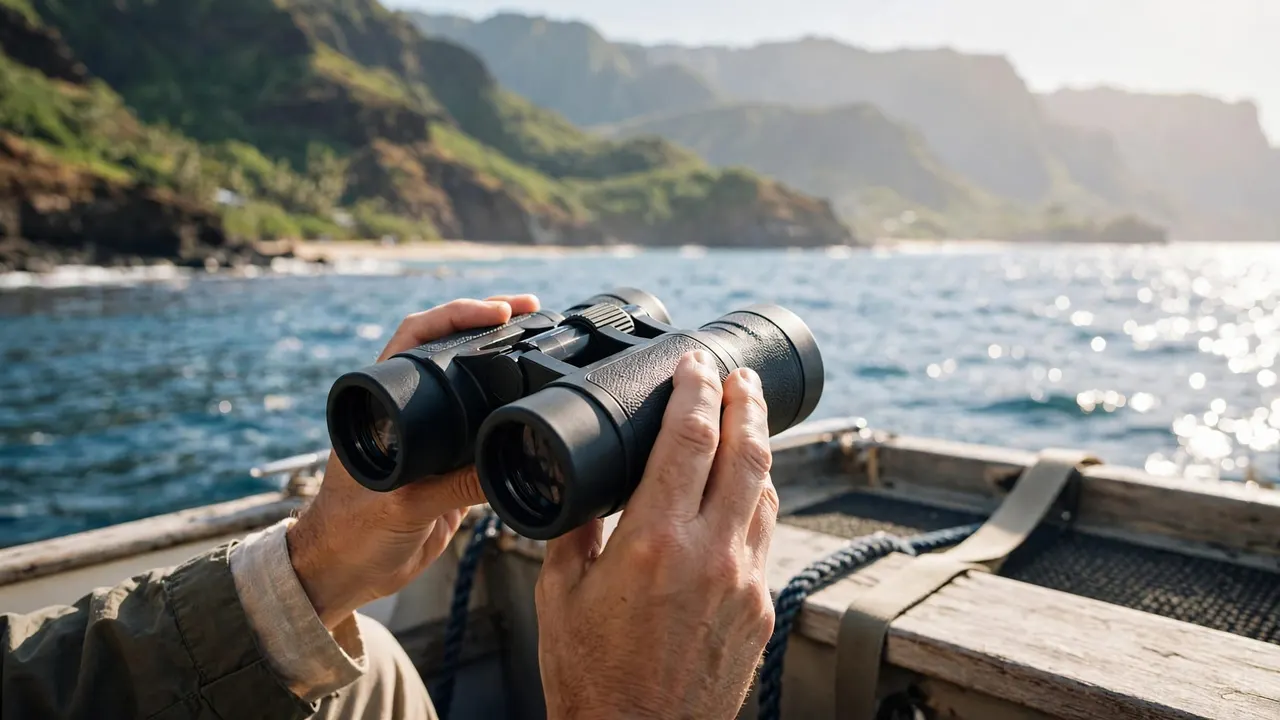
Yes, you can bring binoculars for coastal sightseeing on many recreational boat tours, and a compact pair can make distant scenery easier to enjoy. For boat tour binoculars, steady handling matters more than high magnification.
If you’re joining us at Living Ocean Tours, think of binoculars as an optional sightseeing accessory rather than essential equipment. They’re useful for exploring Oahu’s shoreline and watching distant activity, but you’ll also want time to enjoy the wider view. Start with a pair you can comfortably carry and control while the boat moves.
Key takeaways
- Choose boat tour binoculars that feel comfortable in your hands; moderate magnification is easier to manage on moving water.
- Find your subject with your eyes first, then raise the binoculars while staying seated or standing securely.
- Lower and secure your optics before walking, using stairs, or responding to crew instructions.
- Use magnification to appreciate wildlife at a respectful distance rather than expecting the captain to move closer.
A familiar pair you already own is often enough for a short outing. You don’t need expensive specialty equipment to notice more detail along the coast.
What binoculars add to your coastal views
See more detail along the shoreline
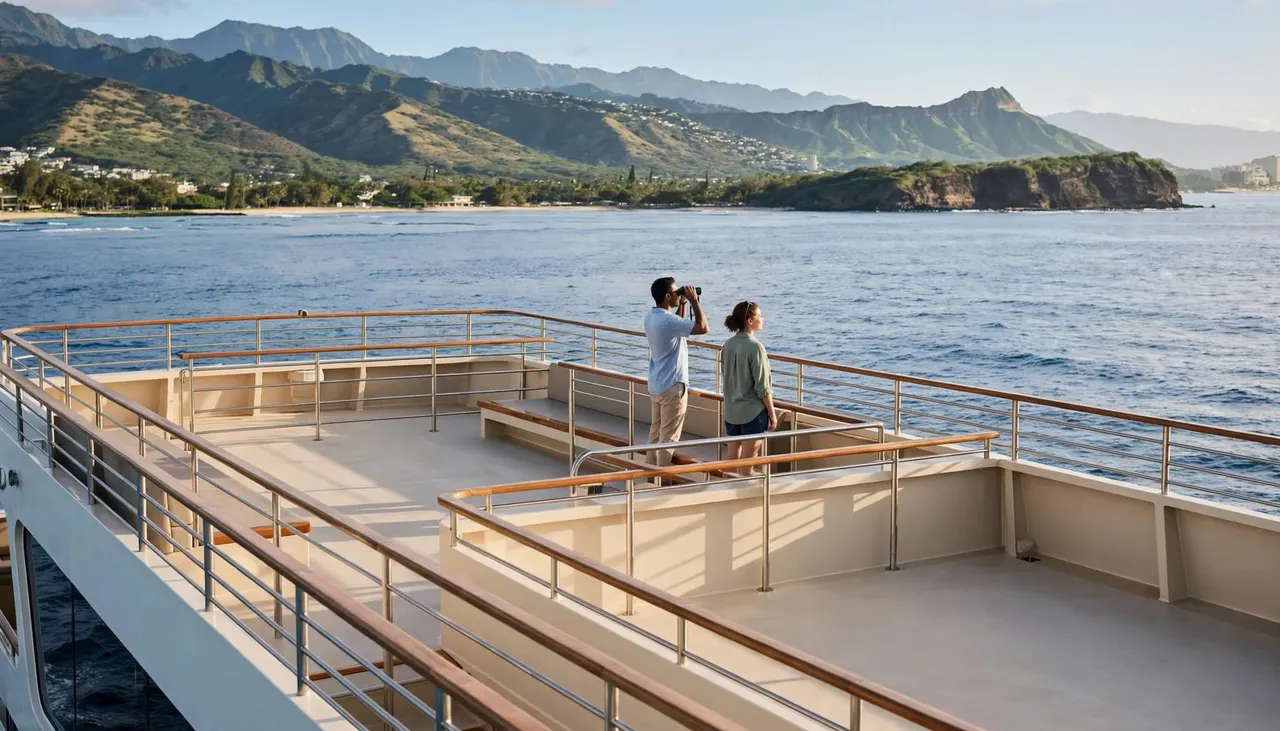
From offshore, Waikiki’s buildings and the slopes of Diamond Head share the same broad view. Binoculars help you separate individual features that blend together at a distance.
For example, you can follow the shape of a ridgeline or study the contrast between green slopes and developed shoreline. However, spend a moment looking without magnification first. That wider perspective helps you understand where each feature sits.
Coastal sightseeing also gives you an easy subject for practicing focus. A distant, stationary landmark is simpler to locate than a seabird crossing the water.
Notice wildlife without chasing a closer view
Binoculars can help you inspect a distant splash or follow a bird above the surface. They won’t reveal every animal beneath the water, and glare can hide activity even nearby.
Listen when the crew identifies a direction, then look toward that area before raising your optics. Because wildlife sightings can last only seconds, searching through binoculars from the outset may make you miss the action.
Keep expectations flexible. An outing can offer rewarding scenery even when no wildlife appears.
Choose boat tour binoculars for a moving deck
Start with manageable magnification
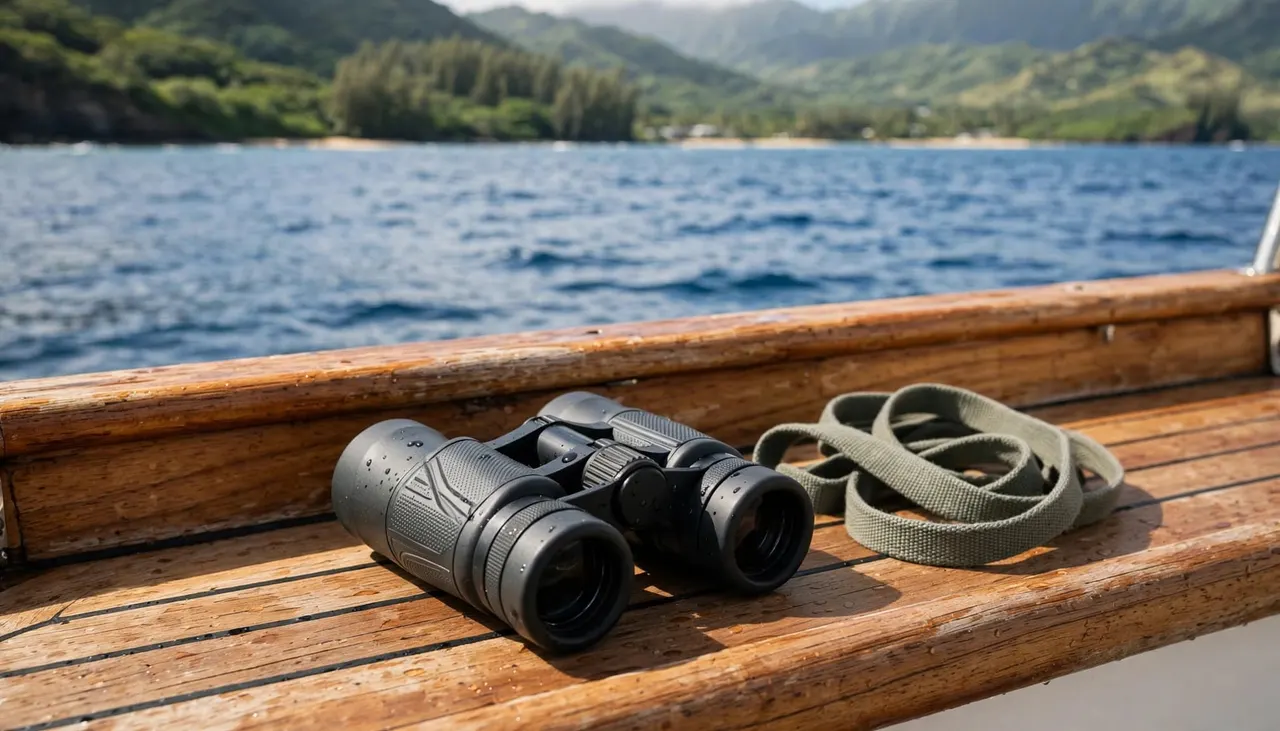
The first number on binoculars describes magnification. An 8x pair makes a subject appear eight times larger than it does to your unaided eyes.
For casual coastal viewing, 8x is a practical starting point. Higher magnification enlarges both the subject and the movement you see through the lenses. On a boat, that extra motion can make distant details harder to follow.
HawkWatch International’s binocular selection advice discusses the choice between 8x and 10x for watching birds. Your ability to locate and hold a subject matters alongside magnification.
Use these common formats as a starting point.
| Format | Practical advantage | Main trade-off |
|---|---|---|
| 8×25 | Small and easy to pack | Less comfortable in dim light |
| 8×32 | A useful balance of size and viewing comfort | Bulkier than pocket models |
| 8×42 | Larger objective lenses gather more light | More weight to carry |
For a daytime outing, comfortable handling usually matters more than choosing the largest lenses.
Favor easy handling and weather protection
Choose a pair you can raise without fumbling. A smooth focus wheel and adjustable eyecups are useful, especially if different family members share them.
Waterproof construction helps protect against spray, but it doesn’t mean binoculars float. A secure strap still matters.
If you wear glasses, try viewing with them on before departure. Adjust the eyecups until you see a full image rather than dark edges. That small adjustment can prevent unnecessary fiddling later.
Hold your view steady and keep the deck clear
Set up before something appears
While seated or standing securely, adjust the binoculars to match the spacing of your eyes. You should see one clear circular view.
Next, focus on a distant coastal feature. Starting with a focused image makes it easier to respond when the crew points out activity.
Keep your elbows close to your body and avoid leaning over the rail. If standing feels uncomfortable, choose a seated position with a clear sightline instead. Don’t press the binoculars against a wet railing or stretch around another passenger.
Lower your binoculars before moving. A magnified view narrows your awareness of nearby feet, bags, steps, and other passengers.
Put movement and crew directions first
Keep a hand available for a railing whenever you walk. Binoculars should be lowered and secured before you use stairs or move between viewing spots.
Meanwhile, leave gates, ladders, and walkways open. A sighting doesn’t make those spaces available for a better angle.
If everyone looks toward the same side, stay patient rather than rushing into the crowd. You may get a clearer view by remaining where you already have room.
Families can make this easier by sharing one viewing position. Let a child look while seated beside an adult, then pass the binoculars back before changing places. Crew instructions always take priority over finishing a look.
Use magnification to give wildlife more space
Binoculars are particularly useful when an animal is too far away to see clearly without approaching it. Your equipment can improve the view while the animal continues its own activity.
NOAA’s Hawaiian Islands whale recreation guidance recommends staying more than 100 yards from whales and using binoculars or other magnifying equipment. That distance is a reason to appreciate good optics, not a reason to expect a closer encounter.
Leave the vessel’s position to the captain. Never ask the crew to chase a whale, cut across its course, or approach a mother and calf for a better look.
Similarly, don’t touch, feed, attract, or pursue animals that appear nearby. NOAA’s broader responsible wildlife viewing guidelines emphasize giving animals space.
If wildlife approaches, follow the crew’s directions and keep its route clear. Lowering your binoculars may give you a better understanding of what’s happening around the boat.
A brief, distant encounter can still reveal natural behavior without putting pressure on the animal.
Pack lightly and protect your binoculars
Store your boat tour binoculars in a padded pouch or small bag when you’re not using them. Keep that bag out of shared walkways and away from water-entry areas.
A strap is useful while viewing, but secure loose loops before moving around the boat. Don’t leave binoculars on a seat edge or rail where a change in motion could send them sliding.
Bring a clean lens cloth, and remove grit before wiping the glass. Rubbing salt crystals or sand across a lens can damage its surface. After exposure to spray, follow the manufacturer’s cleaning instructions rather than scrubbing with a towel.
You also don’t need to carry every accessory. A tripod adds bulk and isn’t a practical default for a shared, moving deck.
Before returning to the dock, put the binoculars away while you’re settled. That leaves your hands available when the crew begins the arrival and disembarking instructions.
Enjoy coastal sightseeing with Living Ocean Tours
With us at Living Ocean Tours, your outing starts at Kewalo Basin Boat Harbor near Waikiki. Bring your curiosity, enjoy the coastal setting, and let our crew handle the vessel while you take in the scenery.
If your plans also include snorkeling, we’re the only tour company with professional snorkel guides. Binoculars are for your time aboard; once you’re in the water, your attention belongs on your guide, your surroundings, and respectful wildlife viewing.
You can choose an ocean experience that suits how you want to spend your day, whether that means watching the shoreline or adding time in the water.
FAQ about bringing binoculars aboard
Can binoculars make you feel seasick?
Looking through binoculars can feel uncomfortable if the magnified image moves around. Wirecutter’s binocular guidance notes that higher magnification can make boat instability more noticeable.
Use them briefly, then return to the natural horizon. If you feel unwell, stop viewing and tell the crew. A clear view isn’t worth pushing through discomfort.
Are boat tour binoculars necessary for children?
Children can enjoy coastal sightseeing without them. Start by helping your child notice large landmarks or describe a splash with their own eyes.
If they want to try binoculars, let them sit beside you and use a lightweight pair. Keep viewing sessions short, and put the equipment away before moving. Comfort and attention matter more than identifying every distant object.
Should you use binoculars near sunset?
They can help while enough daylight remains, although small lenses become less useful as the scene darkens. Enjoy the broader colors and horizon without feeling obliged to keep looking through them.
Never point binoculars at the sun, including a low setting sun. Magnification can cause serious eye injury. Keep your attention on safely lit scenery instead.
Bring a better view, not extra hassle
The right boat tour binoculars add detail without making your outing harder to manage. Choose a comfortable pair, use them from a secure position, and put them away whenever you need to move.
Most importantly, let respectful observation guide the experience. You’ll enjoy more of Oahu’s coastline when your equipment supports your attention rather than taking it away.


