
Boat Tour Accessibility for Guests With Low Vision

At Living Ocean Tours, boat tour accessibility starts with information you can use before you board and throughout your trip. If you have low vision, clear verbal directions and a plan for moving around the boat can help you enjoy the day with greater confidence.
Your needs may differ from another guest’s, so specific requests are more useful than a broad accessibility label. Start with the parts of the outing that matter most to you.
What boat tour accessibility means for low-vision guests
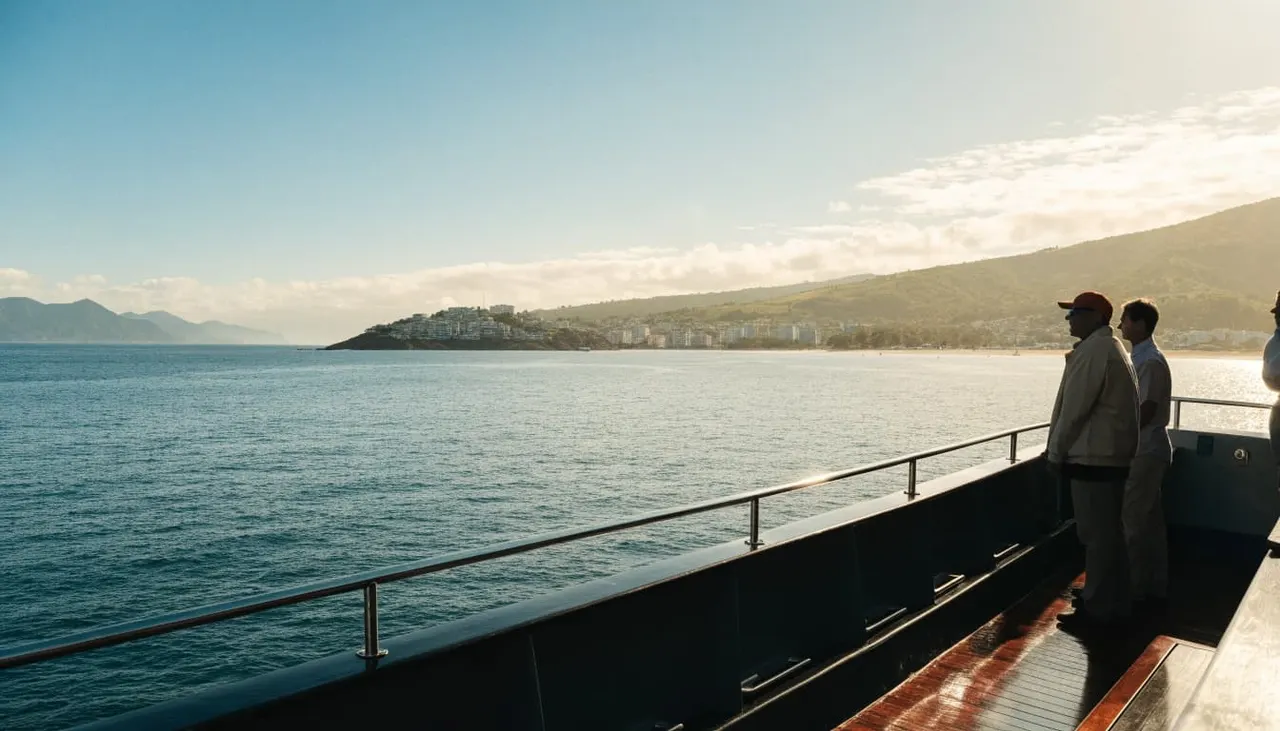
Low vision can affect how you recognize faces, judge distances, read signs, or find objects against a busy background. Glare and changing light can also make familiar tasks harder on the water.
A useful plan covers the whole outing: finding the departure point, boarding, hearing the safety briefing, moving around the vessel, and returning to the dock. If you plan to snorkel, water entry and communication while swimming deserve their own discussion.
The support you prefer may be straightforward. You might want a crew member to describe a step before you reach it, explain where a sound is coming from, or tell you when the group is moving.
For interpreting scenery, verbal descriptions can add details that are otherwise easy to miss. The National Park Service includes audio description among its accessibility guidelines for interpretive media, an approach that can also inform how you request descriptions on an outing.
Choosing an ocean experience with us
Our Oahu boat tours depart from Kewalo Basin Boat Harbor in Honolulu. Coral Kai and Lokahi are double-decker vessels with shaded seating, onboard restrooms, dry storage, and water-entry ladders.
Those amenities describe the boats, but your comfort also depends on the route and activities you want to use. When you share your needs with us, describe the assistance that helps you move confidently and follow instructions.
If snorkeling appeals to you, our Turtle Canyon Snorkel Tour offers an opportunity to visit a natural sea turtle habitat. Our professional snorkel guides support guests in the water. Tell us what you need for orientation and communication before taking part.
You can also CHECK AVAILABILITY for the Turtle Canyon outing.
For other departures, you can browse availability below.
Plan the boarding route and movement aboard
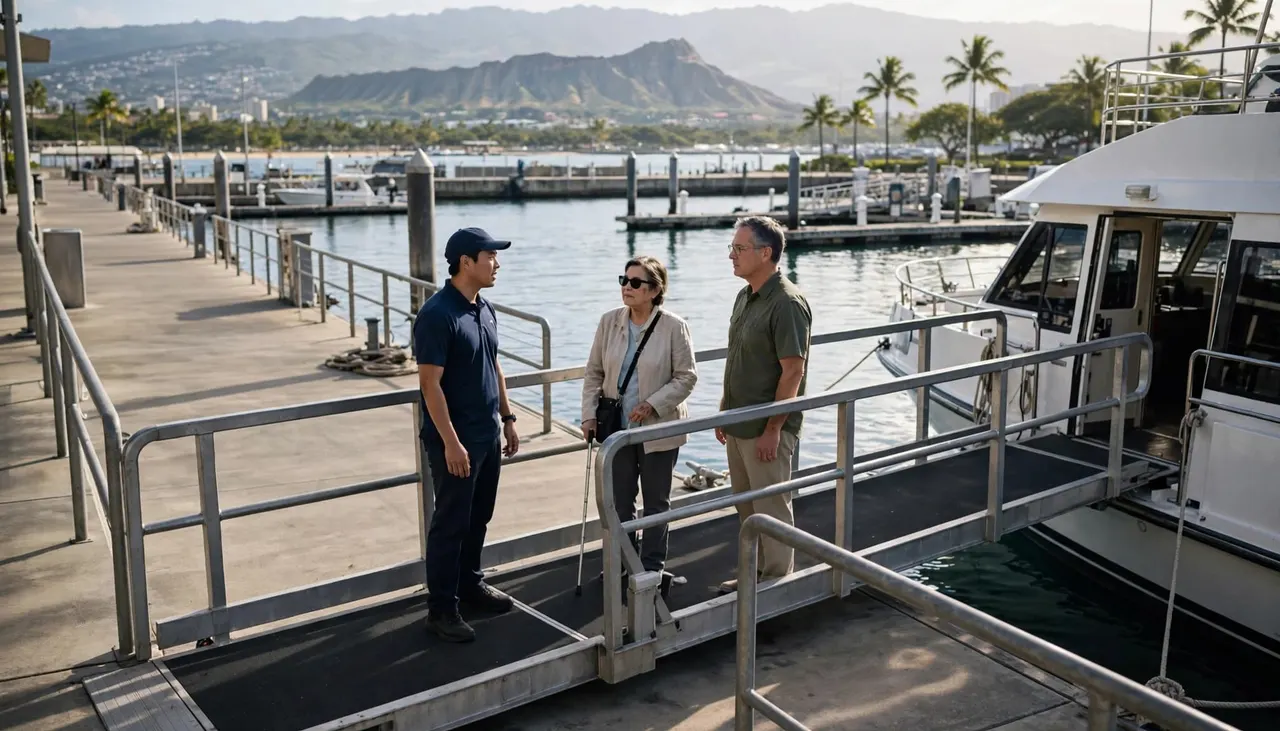
A boat moves differently from a dock, even when the water looks calm. For boat tour accessibility, it helps to treat the approach, the boarding transition, and the passenger deck as separate parts of your route.
Describe the support you prefer
Tell the crew whether you use a white cane, travel with a companion, or prefer verbal directions. If you want someone to guide you, explain how you prefer that person to offer assistance rather than having them take your arm without warning.
You can also describe the kind of information that helps you judge a transition. For example, you may want to hear where the next step begins, which side has a handhold, and when the crew is ready for you to move.
Wait for a clear direction before crossing between dock and boat. If you miss an instruction, ask for it again rather than guessing.
Learn the spaces you’ll use
Once aboard, ask for an orientation to your seat and the route to the restroom. You may also want the crew to identify stairs, gates, railings, and the location of life jackets.
Keep a hand free when moving and use available railings. Store your bag away from passages so you and other guests have fewer obstacles to avoid. At the end of the outing, take the time you need to follow directions back onto the dock.
Make safety instructions easy to follow
Wind, engines, and conversation can make announcements harder to hear. Boat tour accessibility includes receiving safety information in a way you can understand, especially when you can’t rely on a gesture or a sign.
Before departure, tell the crew how you prefer to receive instructions. A direct verbal explanation may work better for you than someone pointing toward equipment. If you miss part of the briefing, request a repeat before the boat gets underway.
Federal passenger vessel transportation rules address effective communication of safety information for passengers with disabilities. Your own request can be more practical: say what you need to hear, where you need the information, and whether you’d like a demonstration.
Pay attention to where your life jacket is stored and how to put it on. If you can’t follow the demonstration visually, ask the crew to explain each step. For a child in your group, listen to the instructions that apply to their equipment too.
A useful direction identifies both the action and the location. “The railing is on your right” gives you more information than “Hold on over there.”
If conditions change during the trip, pause where you are until you understand the crew’s direction. You don’t need to move across the deck to catch an announcement.
Ask for descriptions that bring the coast closer
A boat trip offers more than a view through a camera lens. You may enjoy the warmth of the sun, the sound of water against the hull, and a companion’s description of the shoreline.
Tell your companion or guide what details interest you. You might prefer a brief description of the coast as the boat leaves Honolulu, or more detail about the shape and movement of an animal when one appears.
Clear location words help. Rather than pointing and saying “over there,” someone can describe a sighting as being off the right side of the boat, near the horizon, or closer to the surface. Keep in mind that wildlife moves and sightings aren’t guaranteed.
If you’re traveling with children, invite them to describe what they notice too. Their observations can become part of the shared experience without putting anyone in charge of navigation or safety decisions.
Manage glare and changing light
Sunlight on water can create intense glare. Later in the day, falling light can make steps, faces, and changes in deck level harder to distinguish. Your seating and movement plan can account for both.
Choose a comfortable place to sit
If shade helps you manage glare, let the crew know when you board. Our vessels have shaded seating, though the best position for you depends on your vision and the conditions that day.
You may prefer a seat near your companion or within easy speaking distance of the crew. Once you’re seated, keep your cane and other belongings where you can find them without blocking another passenger’s path.
Move carefully as light changes
Give your eyes time to adjust when you move between bright and shaded areas. Before using stairs or crossing the deck, ask for a verbal description of the route if you need one.
After dark, follow the crew’s directions about lighting. Ask before using a flashlight, and avoid shining a light toward the helm or other boats. If you need a crew member to repeat an instruction face-to-face, ask while you’re safely seated.
Prepare for snorkeling with low vision
Snorkeling adds a separate set of considerations to boat tour accessibility. A route that works for you on deck doesn’t automatically answer how you’ll enter the water, locate your guide, or return to the ladder.
Agree on communication before entering
Tell your guide how much you can see in the water and what helps you recognize a person at a distance. Discuss how you’ll stay with your buddy and how the guide will direct your group.
Learn the tour’s signals for being okay, needing help, and returning to the boat. Practice them with your guide before entering. Also listen to the procedure for losing contact with the group.
If an essential instruction isn’t clear, stay aboard until you understand it. You can take the activity at your own pace without feeling pressured to enter the water.
Plan the return to the boat
Ask the crew to explain the entry and reboarding sequence, including where to wait and how to approach the ladder. The return matters because you may be tired or handling equipment after your swim.
Stay with your buddy according to the crew’s instructions. If you’re uncomfortable or need help, signal early instead of trying to solve the problem alone. Follow your guide’s boundaries around wildlife, and observe turtles without touching, chasing, or crowding them.
Bring equipment that supports your routine
Pack the items you normally use for orientation and comfort, such as sunglasses, a hat, or a white cane. A small bag that closes securely can keep personal items together while leaving your hands available for balance.
If you use a phone’s magnification or speech features, consider how you’ll protect the device from spray. Dry storage is available aboard our vessels, but your own protective case gives you another way to keep equipment together.
A companion can help with descriptions or locating belongings, but agree on that role before you leave. Tell each other when you’re moving away from your seats, and identify a crew member you can approach if your plans change.
Keep any necessary medication easy to reach. If you feel dizzy, unsteady, or unwell, tell the crew promptly rather than crossing the deck alone.
Key takeaways for your boat day
- Explain the verbal directions or guiding assistance that work best for you.
- Learn the route to your seat, restroom, life jackets, and boarding point.
- Ask for safety instructions to be repeated whenever you miss a detail.
- Make a separate communication and reboarding plan if you intend to snorkel.
- Keep walkways clear and follow the crew’s directions as conditions change.
Enjoy the water with a clear plan
Good boat tour accessibility gives you useful information at each stage of the outing. When you can follow directions and understand your surroundings, you have more room to enjoy the ocean.
Share your access needs with us in practical terms, and give yourself time to get oriented. Your adventure should leave you focused on the experience you came to enjoy.


