
Dusk boat photography: Keep a Moving Horizon Sharp
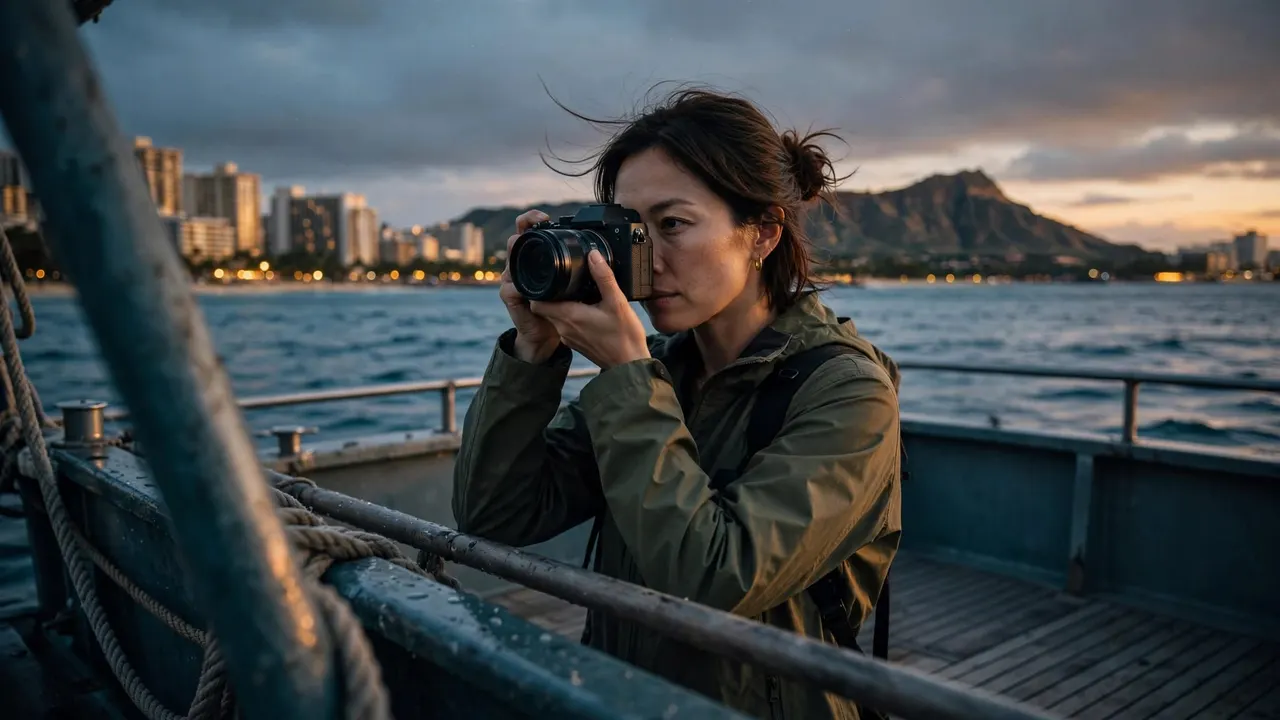
For sharp boat photography at dusk, prioritize a short exposure, a secure stance, and a level horizon. As daylight fades, accept some image noise rather than letting your camera blur the view.
On our Living Ocean Tours outings, you can photograph Waikiki’s changing coastline while enjoying the evening with your family or partner. A phone can capture beautiful results, too, especially when you avoid heavy zoom.
Start with your position on deck, because steady footing matters before any camera setting.
Prepare Your Gear and Find Secure Footing
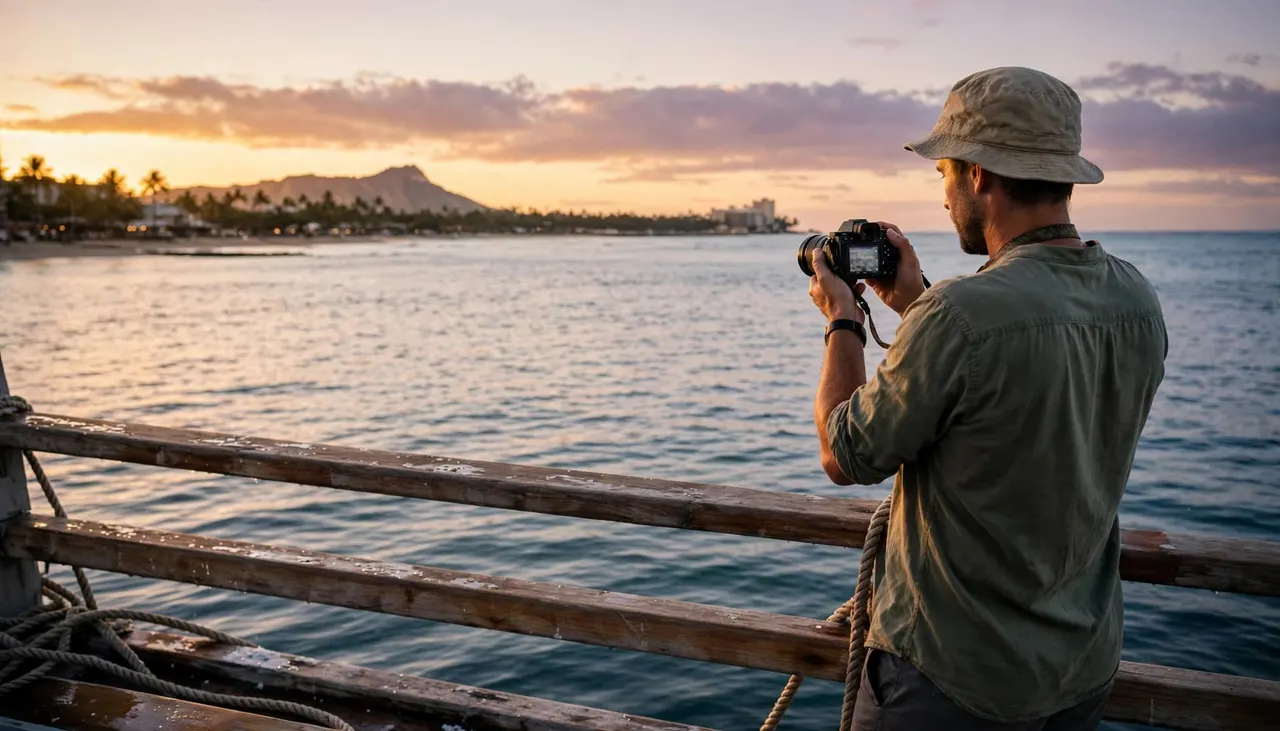
You don’t need the busiest spot at the bow to bring home a memorable photograph. Choose a comfortable viewing position, then let the boat’s changing direction provide different angles.
Choose Comfort Before Camera Height
Keep your feet securely planted and your elbows close to your body. Stay inside the railing, and avoid walking backward while looking through a screen.
A position closer to the middle of the vessel generally feels less lively than the bow. However, follow crew directions about where you can stand or move.
For families, settle children safely before framing your photograph. Shaded seating and an easy sightline can matter more than getting an unobstructed panoramic view.
Carry Less and Protect Your Lens
Bring a wrist or neck strap, a small protective pouch, and a clean microfiber cloth. Salt droplets can scatter bright light and soften an otherwise sharp sunset image.
Clean the lens before boarding, then wipe it again if spray reaches your equipment. Keep your camera tucked away while using stairs.
A light layer also helps after direct sunlight disappears. Comfortable hands and shoulders make it easier to hold your camera without rushing.
Choose Exposure for Dusk boat photography
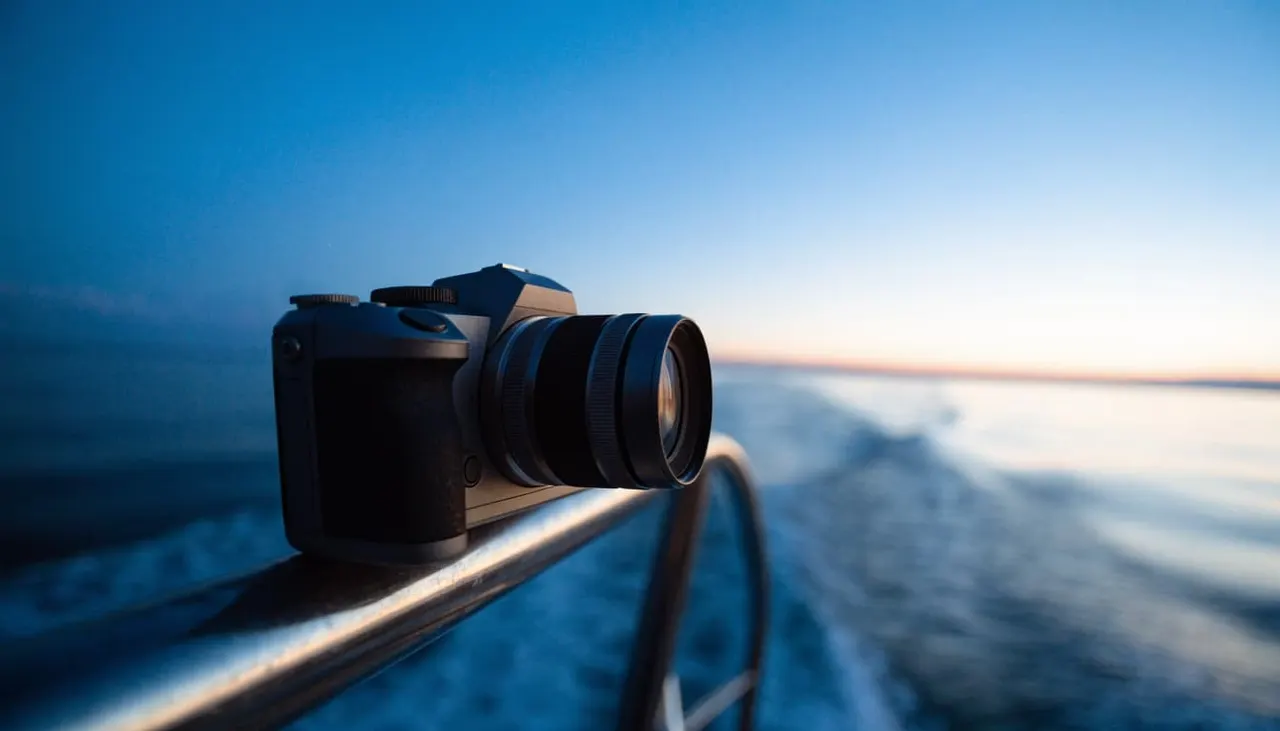
Your camera needs enough light to record the scene, but the vessel keeps moving. Nikon’s guide to understanding shutter speed explains this tradeoff: longer exposures collect more light but increase the opportunity for blur.
Put Motion Ahead of Perfectly Clean Shadows
For boat photography, shutter-priority mode gives you control over exposure duration while the camera adjusts other settings. Start with an exposure short enough to keep distant edges crisp.
Take a test photograph, then enlarge the coastline or horizon on your screen. If those edges smear, shorten the exposure.
Let automatic ISO compensate as the light falls. Some grain is easier to manage afterward than a blurred shoreline. Keep image stabilization enabled when your equipment supports it, but remember that it can’t stop the vessel moving through the scene.
Protect the Bright Sky on a Phone
Use your phone’s standard camera lens first. Heavy digital zoom magnifies visible shake and leaves less room for cropping.
Tap near the bright sky or reflected light, then reduce exposure slightly if those areas look blank. Keep enough shadow detail to recognize the shoreline or foreground.
Skip flash for distant scenery. It won’t illuminate Diamond Head or the horizon, and it can distract nearby passengers. Also, avoid resting unsecured equipment on a rail.
Keep the Horizon Level as the Boat Turns
The horizon itself isn’t rolling. Your camera’s angle changes as the boat pitches, rolls, or turns.
Enable gridlines and align the distant waterline with a horizontal guide. Watch the actual horizon rather than the railing, which can slope across your frame.
Leave a little space around the edges. Later, straightening the image will crop part of the photograph, so a tight composition can lose an important detail.
Gridlines help you level the horizon; a short exposure helps you keep its edges sharp. One adjustment doesn’t replace the other.
Take a brief burst or several separate photographs when the view looks promising. Small changes in boat movement can leave one frame clearer than its neighbors.
Nikon’s advice on freezing motion supports using shutter speed to control how movement appears.
For boat photography, review one enlarged frame rather than judging sharpness from a thumbnail. Then put the screen down between attempts. Continuous screen-watching can make you miss a better angle as the coastline shifts.
Build Depth With Sky, Coastline, and Reflections
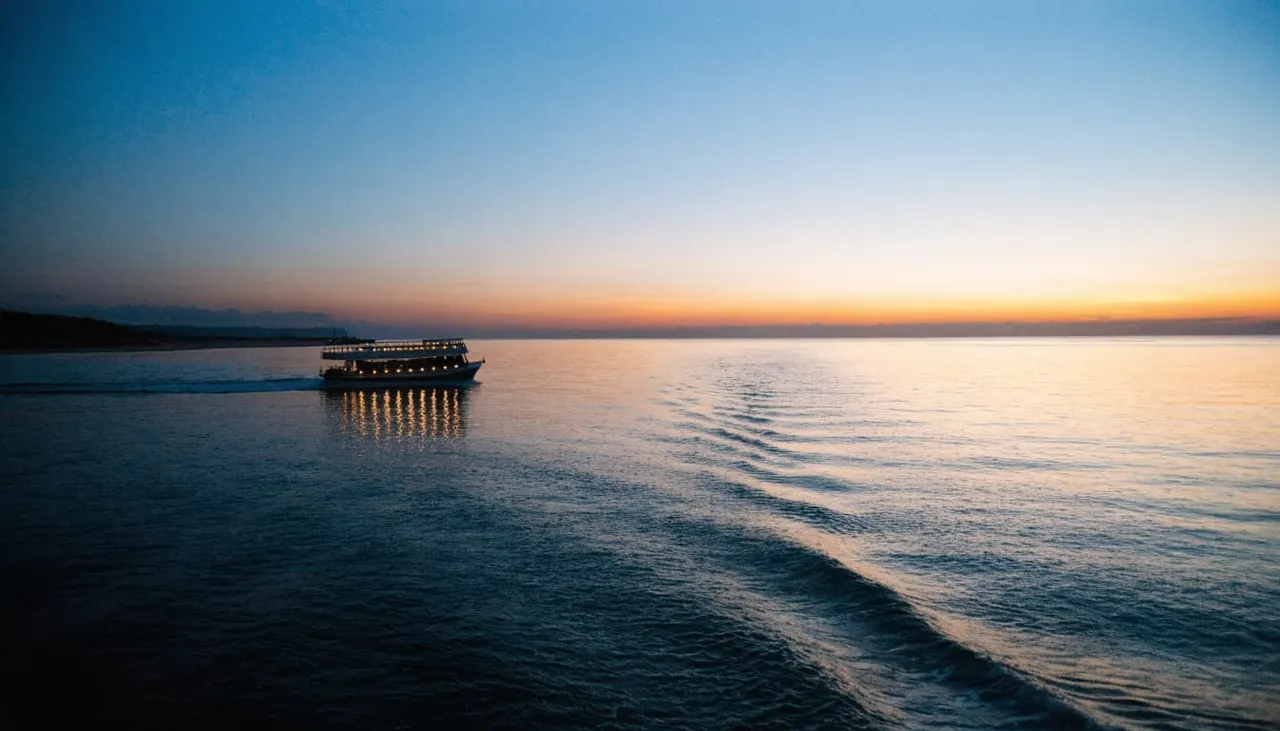
Boat photography becomes more interesting when you change what surrounds the horizon. A wake, a recognizable headland, or a companion can give an open-water scene a clear point of interest.
Give the Strongest Element More Room
Place the horizon lower when clouds and afterglow carry the picture. Raise it when the water holds stronger reflections or an interesting wake.
The ocean reflects light from different parts of the sky. Because ripples face different directions, neighboring patches can appear warm, cool, or nearly black.
Photograph several reflection patterns rather than waiting for the water to become uniform. Keep the foreground simple so it doesn’t compete with the color.
Let Diamond Head Anchor the Scene
Diamond Head gives your photograph a recognizable coastal outline. Leave room around the ridge instead of cutting off its ends.
Don’t expect the sunset to sit directly behind the headland. The sun’s position changes with the season, and the boat’s heading changes your view.
Try a horizontal composition for the coastline, then a vertical frame with more sky. As buildings lose detail, Waikiki’s lights offer another subject. Include some remaining sky so those lights have context beyond a large area of dark water.
Photograph Your Companions Before Twilight Deepens
Take your couple’s or family photograph while natural light still reaches faces. Turn your companions toward the softer light when their footing and the available space allow.
If the bright sunset sits behind them, your camera may render their faces too dark. Move to a different angle or make a deliberate silhouette instead of trying to preserve every detail.
For silhouettes, expose for the sky and leave space between people’s outlines. A sideways pose often reads more clearly than overlapping shoulders.
Keep the pose comfortable and the session short. Nobody needs to lean beyond the rail for an ocean backdrop.
Nikon’s low-light photography guidance notes that longer exposures work better when subjects remain still. On a moving boat, both your companions and your camera can shift.
Once the light becomes faint, prioritize the wider scene rather than repeatedly asking everyone to hold a pose.
Plan Your Sunset Evening With Our Crew
Use the NOAA Solar Calculator to understand sunset timing for Honolulu. Golden hour doesn’t always last a full hour, and cloud cover changes the light you receive.
Our daily Waikiki Sunset Cruise lasts 90 minutes and departs from Kewalo Basin Boat Harbor, minutes from Waikiki. You travel along the coast toward Diamond Head and back without needing to swim or pack wet gear.
At Living Ocean Tours, our boats offer shaded seating, onboard restrooms, and dry storage. We’re also the only tour company with professional snorkel guides. On this dry sightseeing outing, follow our crew’s directions whenever you move around the vessel.
You can explore our Honolulu ocean tour options to choose the outing that suits your group.
For an evening focused on coastal scenery, choose our BYOB or cash-bar sunset options. You can CHECK AVAILABILITY for your Waikiki sunset cruise.
Key Takeaways for Your Dusk Shoot
- Choose secure footing and a comfortable viewing position before concentrating on composition.
- Keep exposures short enough to limit motion blur, even when that means accepting some grain.
- Use gridlines, leave cropping room, and take several brief attempts as the boat moves.
- Photograph faces before twilight deepens, then shift your attention toward reflections, silhouettes, and coastal lights.
Afterward, lower your camera for a while. Watching the water without a screen helps you notice changing colors and decide which view deserves your next photograph.
Frequently Asked Questions
Should You Use Phone Night Mode on a Boat?
Phone night modes often combine several frames or use longer capture times. Boat movement can make those results less reliable than on land.
Start with the standard photo mode and a wide composition. If you try night mode, compare the enlarged result with a normal photograph before relying on it. Look for doubled shoreline lights or smeared edges, which reveal movement more clearly than dark water does.
Will a Tripod or Stabilization Keep Everything Sharp?
A tripod follows the deck’s motion, so it doesn’t create the stationary platform you would have ashore. It also occupies space on a shared cruise.
Handheld photography is usually more practical. Camera stabilization can reduce shake, but it can’t freeze every change in viewpoint. Our Lokahi’s SeaKeeper system helps reduce vessel roll; you still need an exposure suited to the remaining movement.
How Should You Edit a Tilted or Dark Photograph?
Level the horizon first, then crop without cutting off the main subject. Next, adjust highlights and shadows modestly.
Brighten enough to reveal useful detail, but don’t force dark water to look like daylight. Heavy shadow lifting can expose noise. Finally, use restrained noise reduction and sharpening. Neither adjustment can restore edges that motion blurred during capture.
Bring Home a Sharp Horizon and Enjoy the Evening
Successful boat photography at dusk starts with motion control and a comfortable place on deck. Protect bright details, keep your horizon level, and change your composition as the light fades.
Take a few clear photographs of the coast and your companions. Then give yourself time to watch the afterglow without a screen.
Your photograph can preserve the scene while leaving room for the evening itself.


