
Boat Tour Navigation Lights: What Evening Passengers Should Know
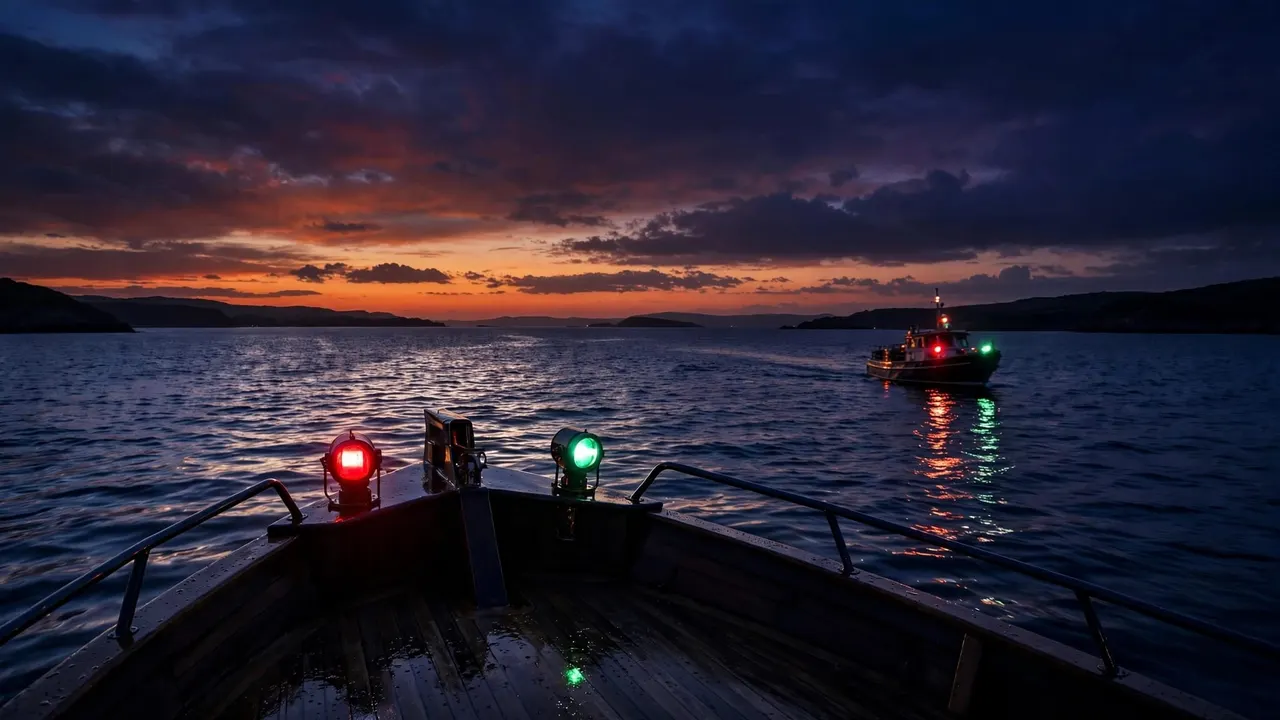
Twilight changes the ocean faster than most passengers expect. The coastline fades, distance gets harder to judge, and boat navigation lights become the clearest language vessels use to tell one another where they are headed.
You don’t need a captain’s license to enjoy an evening cruise safely. However, recognizing a few basic colors and knowing how to move around after dark can make you a calmer, more aware guest on the water.
Why boat navigation lights matter after sunset
Navigation lights aren’t decorative accents for a sunset photo. They are required safety equipment that helps captains identify another vessel’s direction, position, and operating status in low light.
Under the U.S. Coast Guard Navigation Rules, vessels show required lights from sunset to sunrise and during restricted visibility. The exact arrangement depends on the vessel’s size and whether it is powered, sailing, anchored, or engaged in a special operation.
For you, the practical point is simple: keep these lights visible, avoid shining bright lights toward other boats, and let the crew handle decisions about course and speed.
The lights help captains read intent
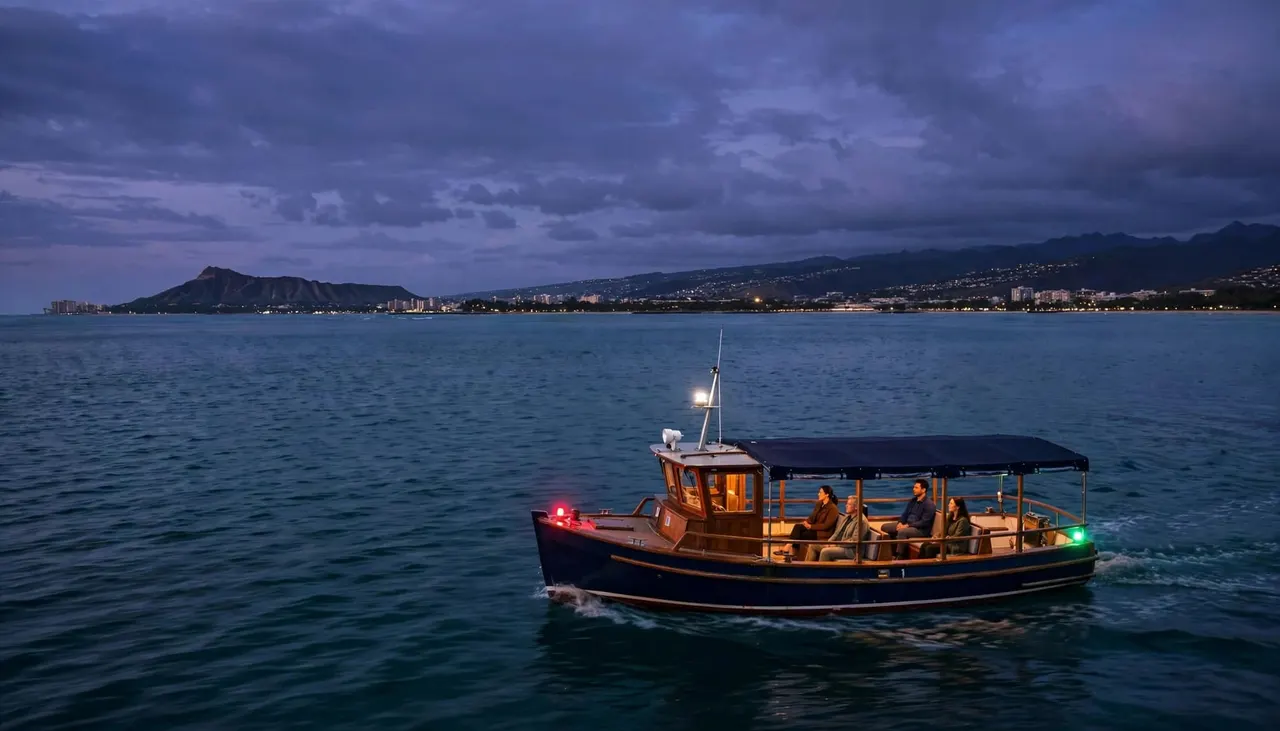
At night, a boat’s outline can disappear against dark water. Red, green, and white lights give another captain a fast picture of what that boat is doing.
A captain may see a pair of colored sidelights, a single white stern light, or a combined pattern. Those details help them decide whether to maintain course, slow down, or alter direction early.
Good seamanship relies on time and visibility. That is why experienced crews keep a watch long before another vessel feels close to passengers.
Your role is awareness, not interpretation
You can enjoy spotting the colors without trying to direct the boat or second-guess the crew. Light patterns can vary by vessel type, size, and activity.
If you notice a concern, such as an unsecured bag near a walkway or a child moving around a dark deck, tell a crew member. Your observation can help the crew keep the space clear and comfortable.
Navigation lights communicate with other mariners. They do not replace a trained crew’s watch, radar, judgment, or safe-speed decisions.
How to read boat navigation lights at a glance
The basic color pattern is easier to remember once you picture yourself facing toward a boat’s bow. Red marks the port side, which is the left side when looking forward. Green marks the starboard side, or right side.
White lights complete the picture. They can show the stern, the forward-facing masthead area, or an all-around light on smaller vessels.
Red and green sidelights show each side
Red and green sidelights each cover 112.5 degrees from straight ahead toward the side of the vessel. If a captain sees both colored lights, the other boat is generally pointed toward them.
When you see only red or only green, you are viewing one side of that vessel. That gives the crew useful information, but it should never tempt you to predict a boat’s path on your own.
The BoatUS Foundation guide to navigation lights offers a helpful visual overview of common lighting combinations. Even a quick look before your trip can make evening cruising more interesting.
White lights show forward or aft position
A masthead light is white and shines ahead over a 225-degree arc. A stern light is also white, but it shines aft over 135 degrees.
On many powered passenger boats, you may see red and green sidelights with white masthead and stern lights. Small boats can legally display different approved arrangements, so no single pattern tells the whole story.
| Light | Usual location | What it helps show |
|---|---|---|
| Red sidelight | Port side | The vessel’s left side when facing forward |
| Green sidelight | Starboard side | The vessel’s right side when facing forward |
| White masthead light | Forward and elevated | A powered vessel’s forward-facing presence |
| White stern light | At the rear | The vessel’s aft direction |
The colors matter because they remain consistent. Once you recognize them, the dark ocean feels less mysterious and more orderly.
Deck lights and navigation lights have different jobs
Your boat may have warm deck lighting for steps, seating, restrooms, and boarding. Those lights help you move safely. Navigation lights help other vessels see and understand the boat.
Both matter, yet they should not compete.
Bright personal lights can interfere
A phone flashlight, camera light, or bright screen can affect your own night vision. It can also distract nearby guests when they are stepping across a wet deck.
Keep your screen dim when possible. If you need help finding a seat, restroom, or personal item, ask a deckhand rather than sweeping a flashlight across the boat.
Flash photography can also spoil a peaceful sunset or fireworks moment. More importantly, strong glare near the helm can interfere with the captain’s view outside.
Decorative lighting must stay controlled
Professional crews choose deck lighting carefully. Extra lights cannot look like navigation signals or make the required red, green, and white lights harder to see.
You may notice that a boat feels darker once it leaves the harbor. That is often intentional. Your eyes adjust, the crew maintains visibility, and other vessels can read the boat’s lighting pattern clearly.
What a safe evening departure looks like
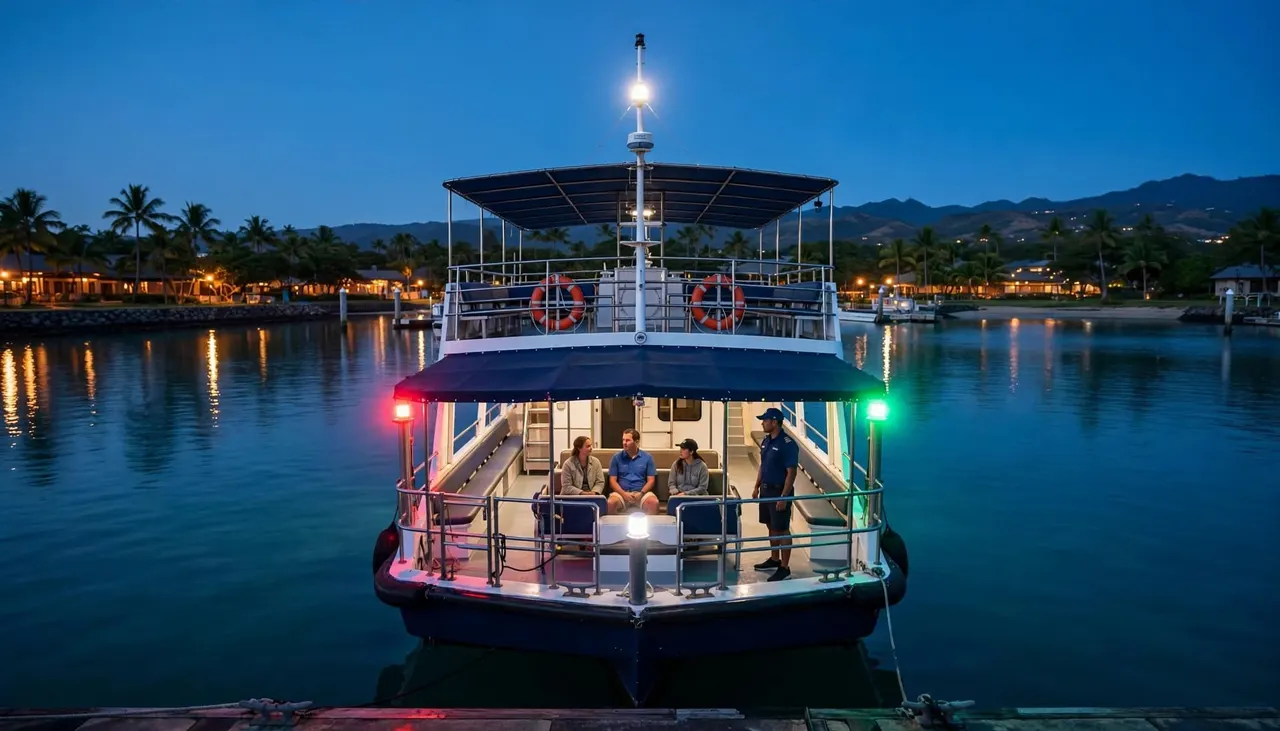
A relaxed start often tells you a great deal about an evening cruise. Before departure, crew members check passenger areas, access points, gear, and conditions around the boat.
They watch the details guests can easily miss, including wet steps, loose bags, open gates, changing wind, boat traffic, and rising swell.
Clear pathways make a difference
After dark, a tote bag in an aisle creates more than a minor inconvenience. It can become a trip hazard when the boat changes speed or turns through a wake.
Keep footwear, cameras, towels, and personal items close to your seat. Follow crew directions around gates and stairways, especially on a double-decker boat.
If a crew member asks you to use a certain route between decks, there is usually a good reason. They may be keeping traffic away from a working area or directing guests toward a steadier path.
Seating affects comfort in ocean conditions
Wind and swell don’t always match the forecast. A deckhand watches how the boat moves and how passengers are responding.
If you tend to get motion sick, say so before leaving the dock. You may feel better in a lower, central seat with fresh air and a view of the horizon. Avoid reading or staring at a phone while the boat is underway.
Small changes help. Have water, eat lightly beforehand, and move only when you have a stable handhold and the crew says it is safe.
How you can move confidently around an evening boat
Your crew handles navigation. You can support a safe trip with a few simple habits, especially when lighting is low and the deck has spray on it.
Wait until the boat has settled after a turn or wake before standing up. Then use handrails and take deliberate steps.
Be ready before the boat gets underway
Arrive with a light layer, secure footwear, and a small bag that closes well. Hawaii evenings can feel cooler on the water than they do along Waikiki’s sidewalks.
Before departure, take a moment to find the restroom, your assigned seating area, and the route back to the dock. If you are bringing children, show them where they should stay seated when the boat is moving.
You can also help by listening during the safety briefing. The information is short, but it covers the procedures that matter if a condition changes.
Follow crew direction near ladders and swim steps
On a snorkeling excursion, the entry platform and ladder need extra care. A crew member manages the flow so swimmers have room to enter, return, and climb aboard without crowding.
Tired legs can make the final ladder climb tougher than expected. Heavy-duty ladders, proper spacing, and a patient deckhand make the return feel manageable, even for first-time snorkelers.
Protect the reef while you are in the water. Float horizontally, keep your fins clear of coral, and never use the reef as a handhold. Hawaiian green sea turtles and coral communities need space, so observe wildlife without touching it.
Choosing an evening Oahu tour with passenger comfort in mind
You should look for a company that treats safety as part of the experience, not as a rushed speech before departure. Ask about the vessel, crew support, onboard restrooms, shaded seating, and how the boat handles a choppy evening.
Living Ocean Tours departs from Kewalo Basin Boat Harbor, minutes from Waikiki. Its Coast Guard-inspected double-decker vessels, Coral Kai and Lokahi, offer onboard restrooms, dry storage, shaded seating, and sturdy ladders for water entry.
Professional guidance adds confidence
Living Ocean Tours is the only tour company with professional snorkel guides. That support matters if you are new to snorkeling, bringing children, or returning to the ocean after a long break.
Crew members help check mask and fin fit before you enter the water. They also monitor sea conditions, assist at the swim platform, and guide you away from reef damage and too-close wildlife encounters.
For sunset, wildlife, snorkeling, and special evening departures, browse the available Waikiki ocean tours. If an evening on the water is part of your Oahu plans, CHECK AVAILABILITY before your preferred date fills.
Enjoy the view while respecting the working boat
An evening cruise should feel easy, but the boat remains an active marine environment. Keep your balance, keep pathways open, and let the crew know if you need assistance.
You can take in the lights of Honolulu, watch the last color leave the sky, and enjoy the ride with more confidence when you understand the basics.
Final thoughts on boat navigation lights
Boat navigation lights make night travel safer because they give captains a shared visual language across dark water. Red, green, and white signals help crews identify other vessels before a close encounter develops.
As a passenger, your best contribution is simple: stay aware, move carefully, and follow the crew’s instructions. A little respect for boat navigation lights and nighttime deck safety lets you focus on the ocean view with confidence.


