
Bioluminescent boat tour: Why ocean water glows
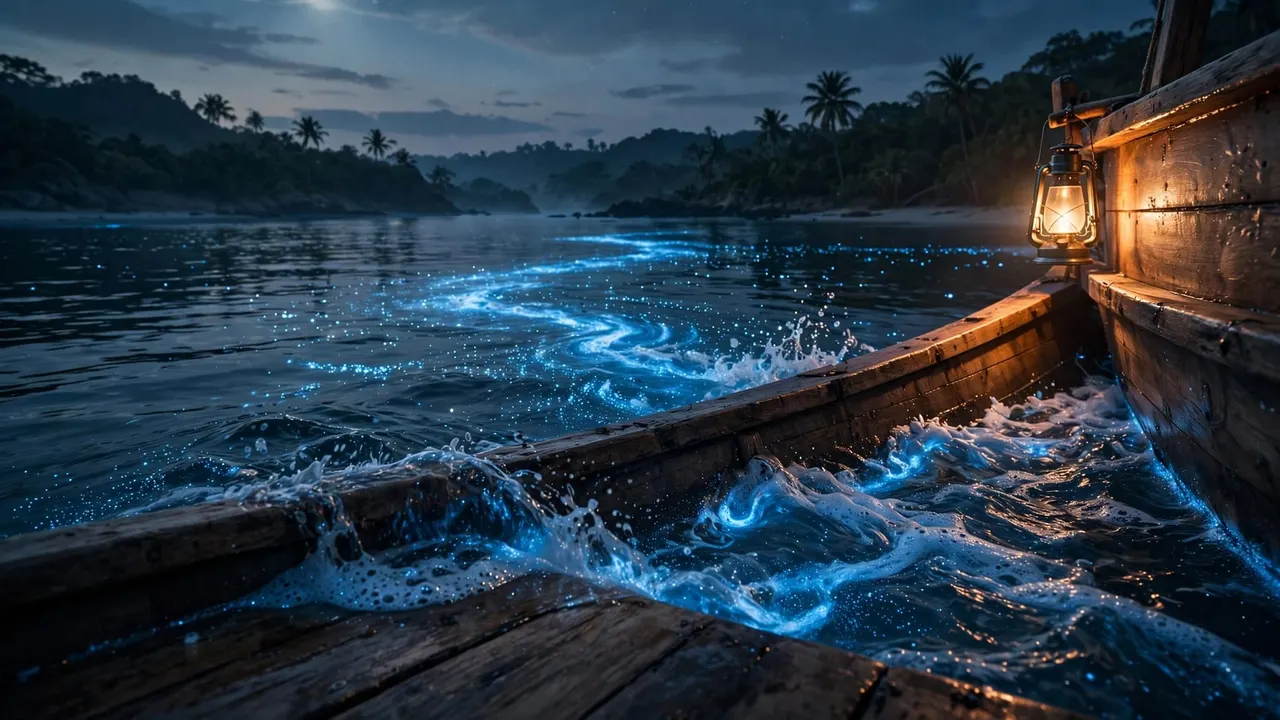
A bioluminescent boat tour gives you a chance to see tiny marine organisms produce flashes of light when the water moves. The glow comes from a chemical reaction inside living creatures, often microscopic plankton called dinoflagellates.
At Living Ocean Tours, we love helping you notice the details that make the ocean fascinating. Knowing what causes the glow makes an evening on the water even more interesting, whether you see a flash or simply watch the sky fade.
What makes ocean water glow at night?
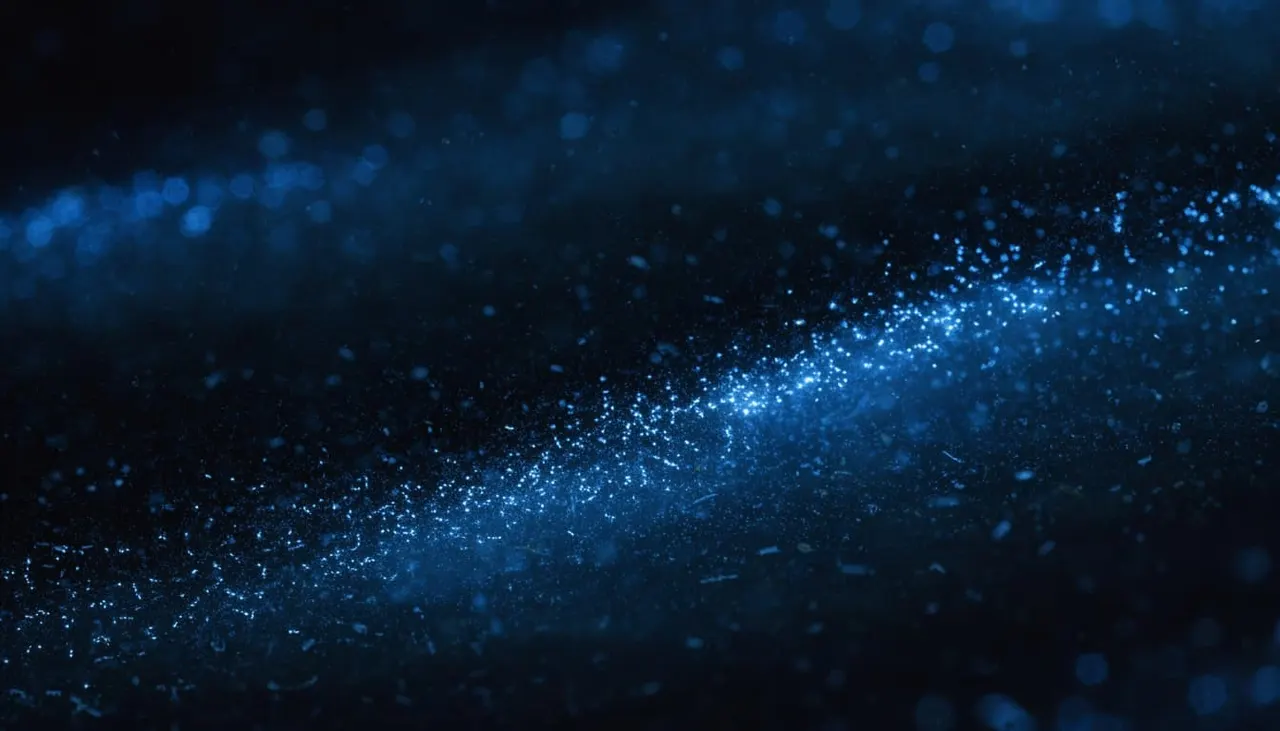
Bioluminescence is light produced by a living organism. As NOAA’s Teacher at Sea program explains, many marine animals can produce it through a chemical reaction.
The ocean itself isn’t generating the light. Instead, you’re seeing organisms within the water briefly illuminate their surroundings.
Tiny plankton make a big display
Dinoflagellates are single-celled organisms found in marine environments. Some can produce light, although many species don’t glow.
When enough light-producing dinoflagellates are present, their individual flashes can become visible together. You might notice points of light along a wave or a streak in disturbed water rather than one continuous, evenly lit surface.
Other marine organisms, including some jellyfish, can produce light too. The source of the glow depends on the animals present, so you can’t identify an organism with certainty from a flash alone.
A chemical reaction produces the light
Inside a bioluminescent organism, a substance called luciferin reacts with oxygen. An enzyme called luciferase helps the reaction produce light.
In some dinoflagellates, movement or pressure in the surrounding water triggers a brief flash. Scientists have studied how wind and other disturbances affect this response. A review of dinoflagellate bioluminescence describes the effect in Noctiluca, one type of dinoflagellate.
What the glow can look like from a boat
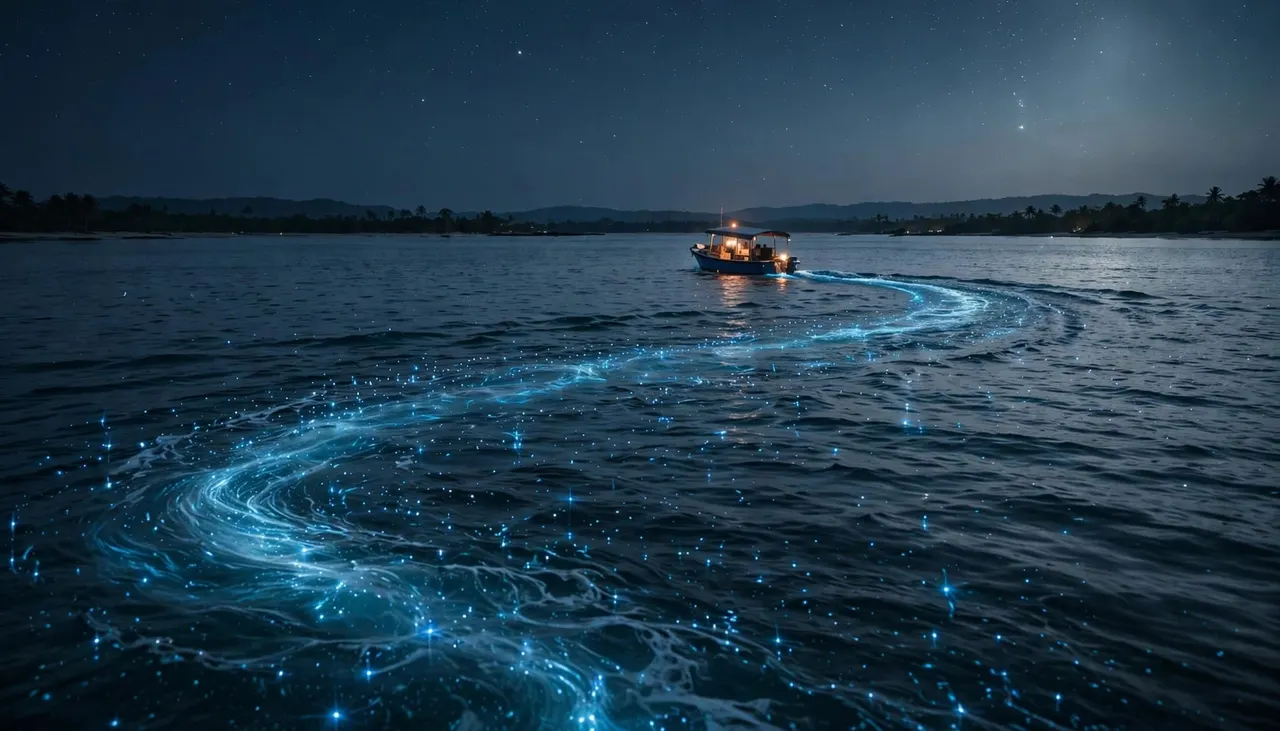
On a bioluminescent boat tour, watch the water where the hull and wake disturb it. Flashes may appear as scattered blue sparks or short trails that fade as the water settles.
Waves can also disturb organisms near the surface. If you see a flash along the edge of a wave, take a moment to watch the next one. The pattern can help you notice how movement and light are connected.
A moving animal can produce a trail too, although a streak alone won’t tell you what caused it. Enjoy the view without leaning over a rail or trying to disturb the water yourself. Your crew needs clear access to the deck, and you get a safer view when you stay in an appropriate passenger area.
What affects your view of bioluminescence?
A bioluminescent boat tour depends on a natural event rather than a light show on a fixed schedule. Even in places known for glowing water, the experience can vary. Keep your attention on the entire evening rather than one photograph you hope to take.
Darkness helps your eyes adjust
City lights, phone screens, and moonlight can make subtle flashes harder to notice. Once you’re away from bright light, give your eyes time to adjust and keep your screen dim.
A darker night can make viewing easier, but darkness alone doesn’t create bioluminescence. The right organisms also need to be present, and the water needs movement to trigger their flashes.
Skip the camera flash when you’re watching the water. It won’t illuminate the distant surface and can interrupt your own adjustment to the dark.
Organisms aren’t spread evenly
A patch of ocean can contain different concentrations of plankton than the water nearby. As a result, a brief flash beside the boat doesn’t mean the whole sea will look the same.
Clouds, shoreline lighting, and your viewing angle also affect what you notice. If you’re traveling with children, invite them to describe the shapes they see rather than promising a particular display.
How to tell a glow from reflected light
Not every shimmer after sunset is bioluminescence. Reflected light and light made by marine life can both appear on moving water, but they come from different sources.
Moonlight, city lights, and sunset color
Moonlight can create a silver path across waves. Harbor lights may stretch into broken lines, while the last light of sunset can leave pink or gold color on the surface.
Those effects change as waves turn toward and away from the light source. They can be beautiful sights on their own, but they’re reflections rather than light produced by organisms.
Flashes in disturbed water
Bioluminescent flashes often appear where something has moved through the water. Look for brief points of light in a wake or along a breaking wave, instead of a steady reflection connected to a visible light source.
A photograph alone may not settle what you’ve seen. Give yourself time to watch the water directly, particularly where the boat’s movement leaves a trail.
Where can you look for a bioluminescent boat tour?
Some coastal areas are known for bioluminescence viewing. In Puerto Rico, Mosquito Bay on Vieques and Laguna Grande near Fajardo are well-known destinations for guided outings.
These are examples of places associated with the phenomenon, not a promise that every departure will produce the same view. A specialized excursion may use kayaks or small boats, depending on the location and the experience offered.
Choose the experience that fits your group
For families, a boat ride can offer a way to watch the water without getting in. If you prefer to paddle, a guided kayak trip may give you a closer view of movement at the surface.
Pay attention to the activity itself when choosing. An evening paddle, a sightseeing boat ride, and a snorkeling excursion involve different levels of physical effort and different safety needs. Pick an outing your group will enjoy even if the natural display is subtle.
Keep wildlife viewing respectful
A glowing-water outing gives you a chance to observe marine life without touching it. Don’t collect organisms, chase animals, or throw food into the water.
If your tour includes time in the water, follow the guide’s directions and avoid contact with the reef. Some plankton blooms can be harmful, so glowing water alone doesn’t mean an area is safe for swimming.
Stay comfortable and safe after dark
A little preparation makes it easier to enjoy a bioluminescent boat tour with your family or partner. Bring a light layer for the breeze and secure your phone or camera with a strap. Keep bags close to your seat and out of walkways.
Listen to the crew’s safety briefing before departure. Once the boat is moving, use the railings when you walk and keep a hand free for balance. Children should stay with an adult, especially near stairs and open deck areas.
Low light makes ordinary tasks less familiar. Ask a crew member for help if you need to find a restroom or move around the boat. Avoid shining a flashlight toward the helm, other vessels, or nearby guests.
If you’re considering a night swim or snorkel elsewhere, choose an outing led by a guide experienced in that activity. Stay with the group, use the safety equipment provided, and follow directions about entering and leaving the water.
Can you photograph glowing water?
You can try, but bioluminescence can be difficult to capture from a moving boat. Flashes are brief, and a longer exposure can blur as the vessel moves.
A camera with manual controls gives you more room to adjust exposure and ISO. If you’re photographing near the water, use appropriate protection for your equipment and keep it secured to you. A phone’s night mode may capture the overall scene, although it may struggle with faint, moving flashes.
Turn off your flash and lower your screen brightness. Then take a few photos and put the camera away for a while. Watching the water directly gives your eyes time to adjust and lets you enjoy the changing pattern without concentrating on a screen.
Enjoy Waikiki’s evening light with us
Our Waikiki Sunset Cruise focuses on the coastline, the changing sky, and time together on the water. It’s a sightseeing experience rather than a bioluminescence tour, so you can enjoy the evening without expecting a glowing-water display.
Living Ocean Tours departs from Kewalo Basin Boat Harbor. Our vessels have shaded seating, onboard restrooms, and dry storage. On our snorkeling outings, our professional snorkel guides help guests enjoy the water responsibly.
You can explore our sunset cruise options and CHECK AVAILABILITY for an evening on the coast.
Bioluminescent boat tour FAQ
Does all plankton glow?
No. Some dinoflagellates produce light, but many don’t. Other kinds of plankton and marine animals may also be present without creating visible flashes.
Is glowing water always blue?
Blue is a common color in marine bioluminescence, though the light produced varies among organisms. Your surroundings and vision can also affect how you perceive it.
Do you need to swim to see it?
No. You may see flashes from a boat or kayak when movement disturbs organisms near the surface. Staying aboard also lets you enjoy an evening on the water without snorkeling equipment.
Take a closer look at the water
A bioluminescent boat tour can reveal how tiny organisms turn movement into fleeting light. The next time you watch a wake after dark, you’ll know what may be behind those flashes.
Even without a glow, the ocean offers plenty to notice. Give your eyes time to adjust, enjoy the changing light, and leave marine life undisturbed.


